
16 Oct 2025
If you’ve walked a highway jobsite lately, you’ve seen it: the shift from welded panels to expanded mesh for barriers and catwalks. The first time I specced a metal mesh guardrail, I was skeptical—then I watched crews cut, bolt, and tension panels in half the time. That tends to make converts.
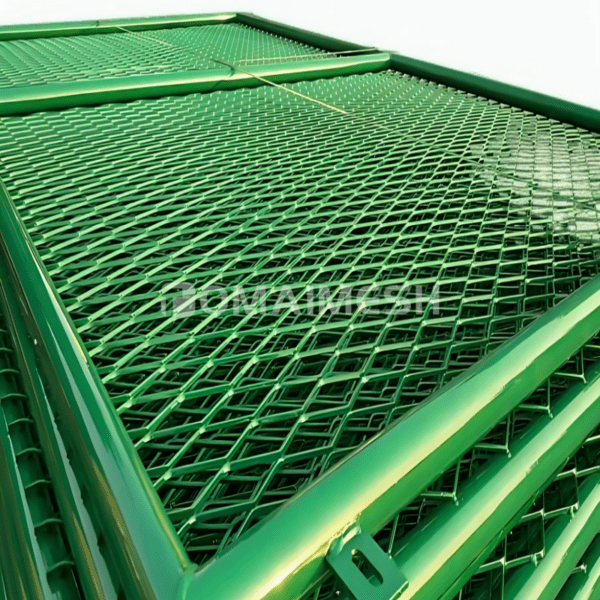
Contractors are pivoting to diamond-expanded patterns for better visibility, airflow, and anti-deformation under crowd loads. In fact, procurement teams tell me lead times are steadier out of Anping, Hebei—where this product originates—than most coastal ports these days. And yes, cost per linear meter has been surprisingly stable even with zinc price wobbles.
| Material | Galvanized Steel DX51D-Z; Stainless 304/316L |
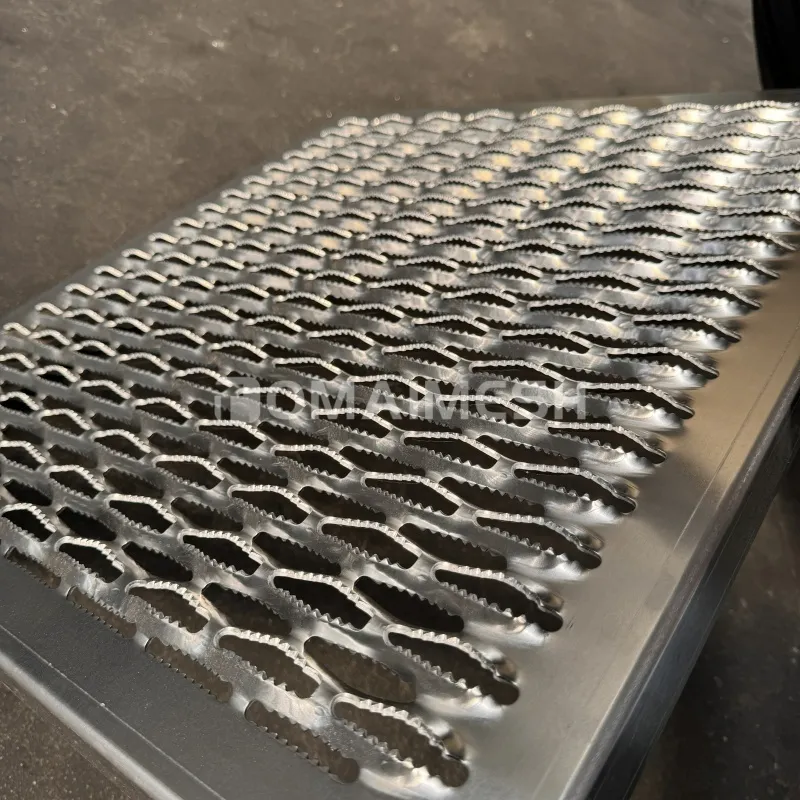
| Pattern | Diamond Stretching (Standard Raised), 60°/90° angles |
| Thickness | 1.5–6.0 mm (strand width 3–30 mm) |
| Sheet Size | Width 1000–2000 mm; Length custom up to 12 m |
| Surface | Hot-dip galvanizing ISO 1461 (≈80 μm) or polyester powder |
| Applications | Highway barriers, industrial platforms, architectural fencing |
- Coil selection (DX51D-Z or 304/316L) → slitting → expanding (raised diamond) → leveling → edge trimming and framing → drilling/slotting → HDG to ISO 1461 or powder coat.
- Tests: coating thickness via magnetic gauge (ISO 2178), adhesion (ASTM D3359), impact (ASTM D2794), salt spray for powder or pre-galv topcoat (ASTM B117; 720–1000 h typical), mesh geometry against ASTM F1267 tolerances.
- Service life: ≈15–25 years in C3–C4 atmospheres with 80 μm HDG; ≥25 years in low-pollution inland sites per ISO 9223 guidance (real-world use may vary).
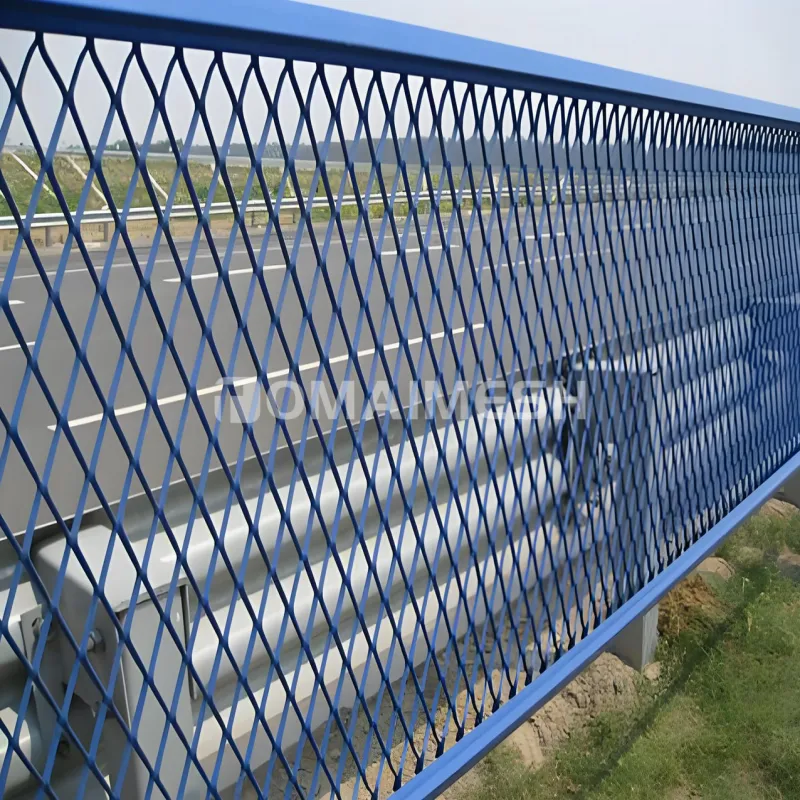
- Highways and bridges: less wind load than sheet infill, good driver visibility.
- Industrial platforms and catwalks: non-snag, lighter than bar grating panels of similar stiffness.
- Stadiums and public venues: anti-climb diamond pattern with clean sightlines.
- Ports and chemical plants: stainless 316L for chloride-heavy air, fewer welds to corrode.
Many customers say installation is quick—no fiddly mesh wires to weld, just bolt and go.
| Vendor Type | Pros | Watch-outs |
|---|---|---|
| Factory in Anping (origin: East Development Zone, Hengshui) | Traceable coils, stable HDG lines, custom angles 60°/90° | Confirm coating certs and geometry per ASTM F1267 |
| Local fabricator | Fast small-batch replacements | May outsource galvanizing; variable zinc thickness |
| Broker/importer | One-stop logistics and compliance docs | Specs drift unless contracts lock tolerances |
Dial in strand width (e.g., 8–12 mm for public barriers), specify raised diamond orientation for anti-climb, and call out ISO 1461 zinc ≥80 μm or RAL-matched polyester powder. For highway work tied to EN 1317 systems, coordinate panel stiffness with post spacing—sounds fussy, but it avoids re-tests later.
- Northern expressway retrofit: HDG panels (1.8 mm) cut site-to-fit; crew reported ≈30% faster install versus welded mesh.
- Food plant mezzanine: 316L powder-coated; maintenance likes the easy washdown and no frayed wires.
And yes, the visibility through a metal mesh guardrail is a quiet safety win—operators see hazards sooner.
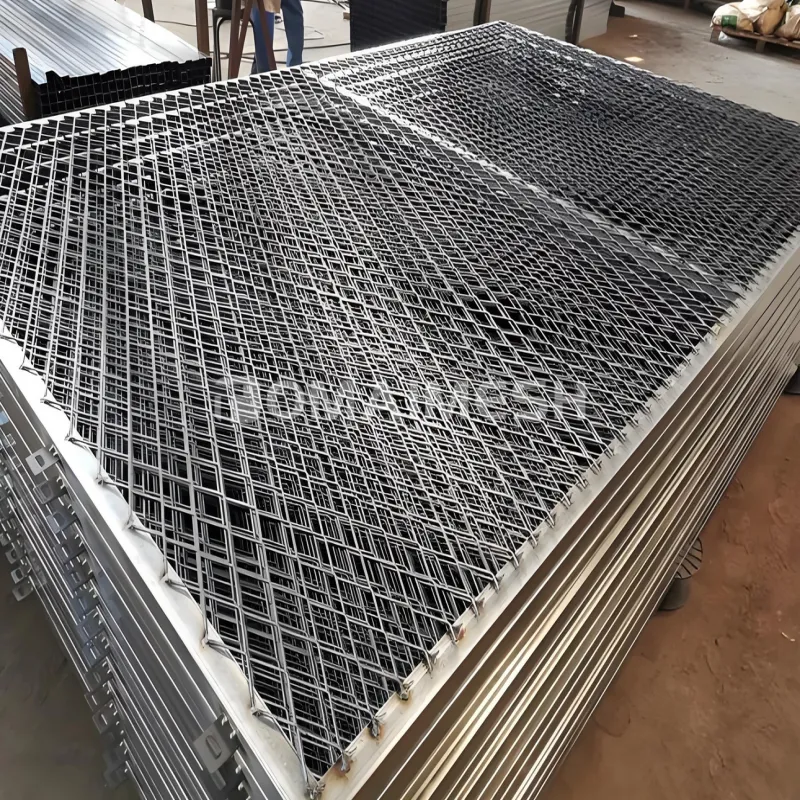
Ask for: mill certs (DX51D-Z or 304/316L), ISO 9001 QA, ISO 1461 galvanizing reports, powder cure logs, ASTM B117 salt-spray data, and geometry checks to ASTM F1267. If your spec mentions crash-barrier interfaces, sync with EN 1317 documentation. It sounds bureaucratic—I guess it is—but it saves rework.
Bottom line: a well-made metal mesh guardrail blends durability, visibility, and straightforward installation. The trick is locking down standards and coating thickness up front.


Hit enter to search or ESC to close