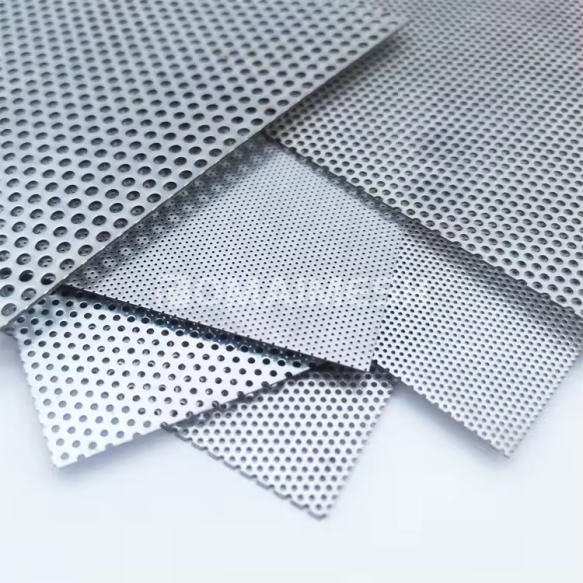
High-Performance punched metal panels Solutions for Thailand Construction

Providing precision-engineered architectural and industrial metal components tailored for Thailand's unique environmental and structural requirements.

High-Performance punched metal panels Solutions for Thailand Construction

Integrating advanced structural engineering with precision perforation to deliver durable, aesthetic, and functional metal solutions for the Thai industrial landscape.

Market Status of Metal Fabrication in Thailand

Analyzing the demand for high-grade structural metal products in Southeast Asia's hub.

Thailand's metal fabrication industry is currently experiencing a surge in demand for corrosion-resistant materials due to the high humidity and coastal salinity prevalent in regions like Bangkok and Chonburi. This has led to an increased adoption of perforated aluminium plate, which offers superior oxidation resistance compared to traditional carbon steel.

The construction sector in Thailand is shifting towards "Green Building" certifications, requiring materials that optimize natural ventilation and light filtration. Consequently, perforated mesh metal has become a staple in modern facade design to reduce HVAC energy consumption in tropical climates.

Despite the growth, the local market faces a gap in ultra-precision tooling. There is a critical need for specialized slotted perforated metal for heavy-duty industrial filtration and safety guarding in the automotive and electronics manufacturing plants across the Eastern Economic Corridor (EEC).
Evolution of Structural Metal Perforation

From manual punching to CNC-driven precision engineering.

Market Development History

Prior to 2010, the Thai market relied heavily on basic mechanical punching, where consistency was low and designs were limited to simple circles. Most square perforated sheet products were generic and lacked the tolerances required for high-end architectural integration.

Between 2010 and 2020, the introduction of CNC turret punch presses revolutionized the industry. This era saw the transition toward custom patterns and tighter tolerances, allowing architects in Bangkok to utilize metal panels as sophisticated sun-shading devices.

Since 2020, the focus has shifted toward material science and surface treatment. Laser-cutting hybridization and advanced powder coating technologies have enabled the creation of complex, durable panels that can withstand the intense UV radiation of the Thai sun.

Future Development Trends

Sustainable Material Integration

Expect a shift toward recycled alloys and bio-compatible coatings to align with Thailand's BCG (Bio-Circular-Green) economic model.

Smart Parametric Design

The use of AI-driven parametric patterns to optimize airflow and acoustic dampening in urban infrastructure.

Anti-Corrosion Nanotechnology

Integration of nano-ceramic layers on aluminium plates to ensure zero-maintenance lifespans in saltwater-exposed environments.

Industry Trends and Future Outlook

Strategic foresight for the structural metal sector in Asia.

Eco-Friendly Fabrication
Transitioning to carbon-neutral manufacturing processes to meet international export standards.
Customized Geometry
Moving beyond standard holes to complex organic shapes using advanced CNC technology.
Lightweighting Trends
Optimization of void ratios to reduce structural weight without compromising load-bearing capacity.
Digital Twin Integration
Using BIM and digital twins to simulate airflow through perforated panels before production.

Industry Outlook

Over the next 3-5 years, the Thailand metal products market is expected to see a 6.5% CAGR in the specialized structural segment. This growth is driven by the expansion of smart city projects in the Bangkok Metropolitan Region, which demand high-precision acoustic and solar control panels.

Google search trends indicate a rising interest in "sustainable architectural metals" and "corrosion-proof industrial mesh," suggesting that the market is moving away from commodity steel toward high-value, specialized alloys and engineered finishes.

Localized Application Scenarios in Thailand

Practical implementations of perforated metal solutions across diverse Thai industries.

1. Tropical Facade Ventilation for Bangkok Skyscrapers

Utilizing punched metal panels as a secondary skin to shield glass interiors from direct solar heat while maintaining natural airflow, significantly reducing cooling costs.

2. High-Humidity Industrial Flooring in EEC Factories

Implementing square perforated sheet as drainage gratings in chemical and automotive plants to prevent water accumulation and ensure worker safety.

3. Coastal Infrastructure Protection in Phuket

Deploying perforated aluminium plate for seaside walkways and railings to prevent salt-spray corrosion while providing a modern aesthetic.

4. Specialized Filtration for Agri-Processing Plants

Applying slotted perforated metal in rice and sugar processing facilities for precise material grading and debris filtration.

5. Urban Security Fencing for Smart City Projects

Using perforated mesh metal for perimeter security that balances visibility with high structural strength in new commercial districts.

Brand Story

Global Development Journey of Anping Tomei Wire Mesh Products Co., Ltd.

Foundational Precision

Started as a specialized workshop focusing on high-tolerance mesh, we dedicated ourselves to solving the "deformation" pain point in structural metal products.

Technological Leap

Invested in state-of-the-art CNC punching centers to transition from manual labor to automated precision, ensuring 100% consistency across large-scale orders.

Global Standards

Achieved ISO certifications and developed a rigorous quality control system to meet the strict architectural codes of Europe and North America.

Asian Market Expansion

Established a strategic focus on Southeast Asia, specializing in corrosion-resistant solutions for tropical climates like Thailand.

Sustainable Future

Now leading the industry in green metal fabrication, integrating recycled materials without sacrificing structural integrity.

Comprehensive Metal Solutions for Thailand

A complete portfolio of precision-perforated products designed for the Asian market.

Common Questions in the Thai Metal Market

Expert answers to the most frequent technical and commercial queries.

Which material is best for perforated aluminium plate in coastal Thailand?

For coastal areas like Pattaya or Phuket, we recommend marine-grade aluminium alloy 5052 or 6061 with an additional anodic oxidation coating to prevent saltwater pitting.

How do punched metal panels help with energy efficiency in Bangkok?

By utilizing specific open-area percentages, these panels act as sun-shading devices that block UV radiation while allowing natural air ventilation, reducing the load on HVAC systems.

What is the difference between square perforated sheet and mesh for industrial use?

Square perforated sheets are punched from a solid plate, offering higher structural rigidity, whereas mesh is woven. The sheets are preferred for load-bearing architectural elements.

Can slotted perforated metal be customized for specific filtration sizes?

Yes, our CNC technology allows for precise control over slot width and pitch, ensuring that your filtration system meets exact micron-level requirements.

What are the lead times for shipping perforated mesh metal to Thailand?

Depending on the order volume and customization level, production typically takes 7-15 days, with shipping to major Thai ports taking an additional 14-21 days.

How do I ensure the durability of metal panels in high-humidity environments?

We recommend high-grade powder coating or PVDF coatings, which provide a non-porous barrier against moisture and atmospheric pollutants common in urban Thailand.

Get a Professional Technical Consultation

Our engineering team is ready to support your next structural project in Thailand with precision-engineered metal solutions.

Contact Us Now

If you are interested in our products, you can choose to leave your information here, and we will be in touch with you shortly.