Stamped metal sheets – you see ‘em everywhere, but most folks don’t give ‘em a second thought. From the chassis of your car to the roof over your head, these aren’t just pieces of metal; they’re the backbone of modern manufacturing. We’re talkin’ strength, precision, and cost-effectiveness, all rolled into one. I’ve spent years on sites, watching projects rise from the ground, and you quickly learn which materials deliver and which ones don't. Stamped metal consistently delivers.
It’s not just about big construction, either. Think about everyday items – appliances, electronics, even the cans holding your beverages. Stamped metal sheets are key to producing these efficiently and reliably. Global supply chains depend on the consistent availability of quality stamped components. And that reliability? That translates directly into fewer delays, lower costs, and happier clients - the kind of things that keep a project manager sane.
What’s really impressive is how versatile these sheets are. They can be molded into almost any shape, tailored to specific needs, and mass-produced with incredible accuracy. We’ve moved past the days of purely manual metalwork; this is about precision engineering and streamlined production. And frankly, it’s a material that's constantly evolving with new alloys and processes to meet ever-demanding standards.
The Significance of Stamped Metal Sheets
Let’s be real: stamped metal sheets are a silent workhorse in our world. They’re the building blocks of so much of what we rely on daily. The sheer volume produced globally is staggering – we’re talking billions of parts annually. This demand isn’t accidental; it's because they address a core need in manufacturing: creating durable, consistent components at scale. I've seen first-hand how a project can be stalled by material issues, and stamped metal is one you can generally count on.
The real challenge isn’t just making the sheets, but making them reliably and to spec. The increasing demands for lighter materials, higher strength, and complex geometries are pushing the boundaries of what’s possible with stamped metal. That’s where innovation in alloys, tooling, and process control comes into play. You see that happening every day at stamped metal sheets suppliers who are investing in new technology.
Defining Stamped Metal Sheets
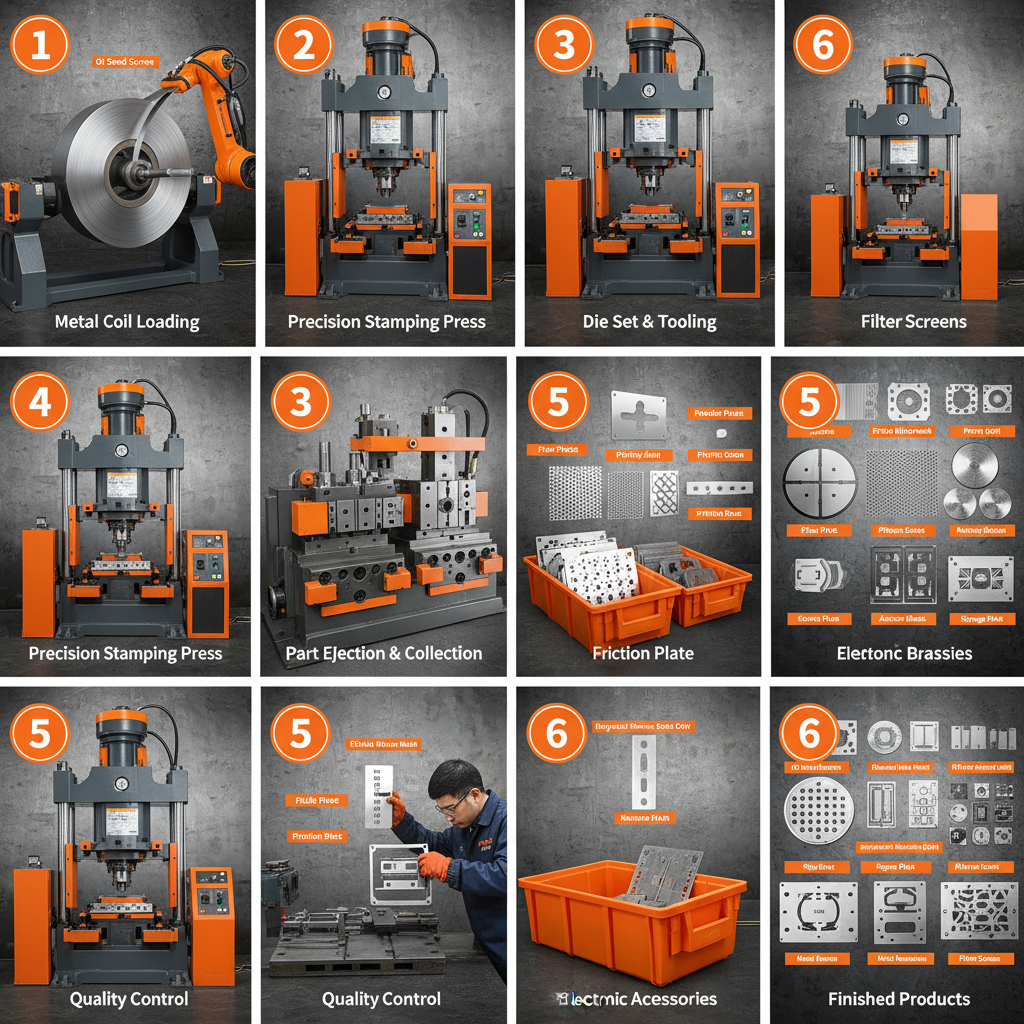
Simply put, stamped metal sheets are created by pressing metal between a die and a punch. That sounds basic, right? But it’s a highly controlled process. It isn't like hammering out a shape by hand. The tools are precisely engineered, and the process is designed for speed and repeatability. We’re talking about taking flat sheets of metal – steel, aluminum, brass, you name it – and transforming them into complex shapes with remarkable accuracy.
This process is critical because it provides a viable alternative to machining, which is often slower and more expensive, especially for high-volume production. It’s a core manufacturing process for creating everything from simple brackets to intricate automotive parts. It’s vital to the modern industrial world.
You’ll find stamped metal playing a huge role in addressing global needs. Consider disaster relief shelters: rapid deployment housing relies heavily on stamped metal components for structural integrity and ease of assembly. It's not just about building things; it's about building them quickly when time is of the essence.
Core Characteristics of Stamped Metal Sheets
There are a few key things that make stamped metal sheets so valuable. First, durability. A properly stamped part, especially from a high-quality alloy, can withstand significant stress and wear. I’ve seen stamped steel components still functioning flawlessly after decades of use.
Secondly, scalability. Once the tooling is created, you can produce thousands, even millions, of identical parts quickly and efficiently. This is why it’s the go-to method for mass production. It really shines when you need a lot of the same thing, consistently.
Third, cost-efficiency. Compared to other manufacturing processes, stamping is often cheaper, especially for large production runs. Less waste, faster production, and optimized material usage all contribute to lower overall costs. And in this business, keeping costs down is always a win.
Practical Applications Across Industries
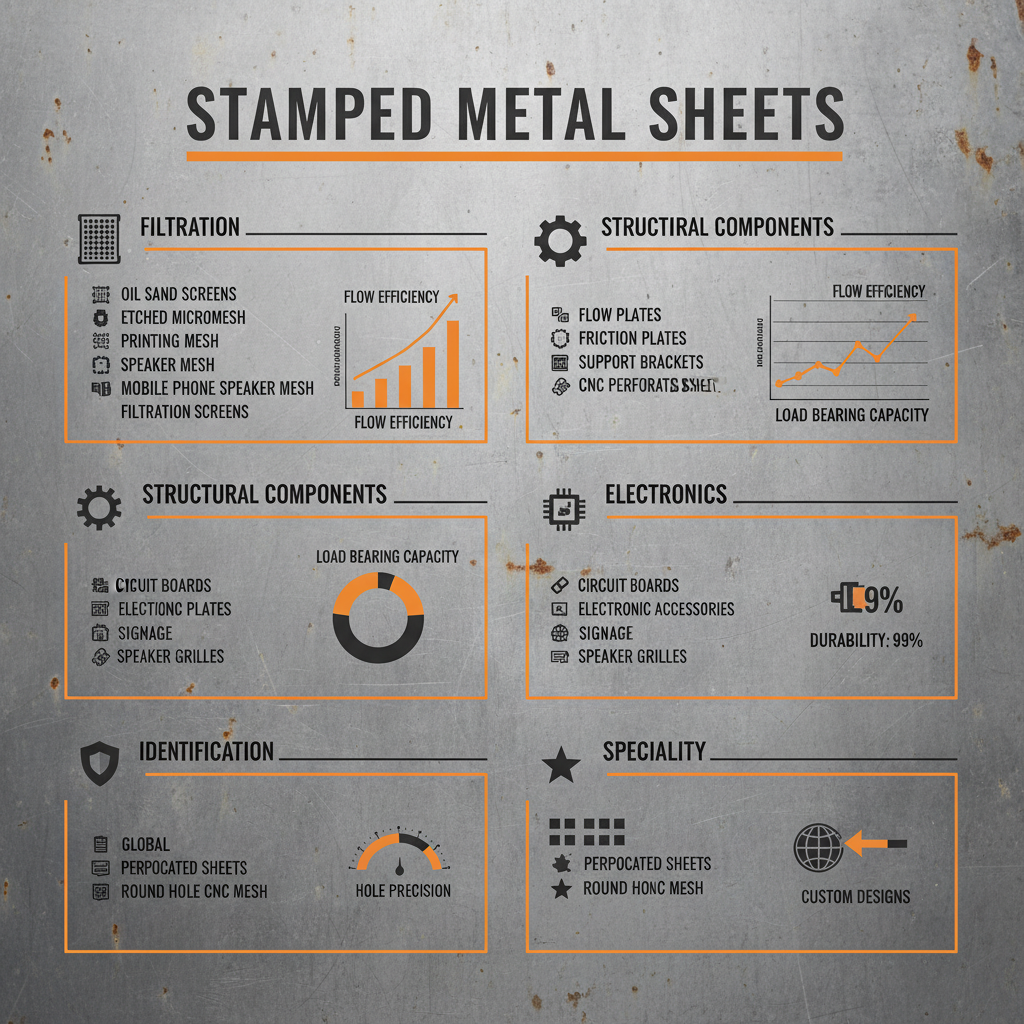
Where don't you find stamped metal? Seriously. Automotive – think body panels, chassis components, and interior parts. Appliance manufacturing – the shells of your refrigerator, washing machine, and oven are often stamped metal. Aerospace – critical components in aircraft structures. Electronics – housings for computers, phones, and other devices.
The construction industry relies heavily on it for roofing, siding, and structural supports. I’ve worked on projects where entire buildings are clad in stamped metal, providing a durable and weather-resistant exterior. The medical field uses it for surgical instruments and implants, demanding extreme precision and biocompatibility.
Stamped Metal Sheet Application Rating
Advantages & Long-Term Value Proposition
Look, bottom line matters. Stamped metal sheets deliver cost savings without sacrificing quality. That’s a huge win for project budgets. And it’s not just about the initial price; it’s about long-term reliability. Less maintenance, fewer repairs, and a longer lifespan all add up to significant savings over time.
Beyond cost, there's the sustainability factor. Many metals used in stamping are recyclable, reducing environmental impact. And increasingly, manufacturers are adopting "lean" stamping techniques to minimize waste and maximize material utilization. That's good for the planet and good for business.
Global Impact and Use Cases
We’re talking a truly global industry. Asia, particularly China and India, is a major production hub, but demand is widespread. You see it driving infrastructure development in emerging economies, enabling mass production in established industrial nations, and supporting innovation in high-tech sectors worldwide. I've seen projects in remote locations relying entirely on stamped metal components shipped from across the globe.
Think about disaster relief efforts. Quickly deployable shelters often incorporate stamped metal framing for stability and portability. The speed and efficiency of stamped metal production are crucial in these situations. In remote industrial zones, where access to skilled labor is limited, stamped metal provides a consistent, reliable manufacturing solution.
I recently worked on a project in Africa utilizing pre-fabricated structures made almost entirely of stamped metal. It cut build time in half and dramatically reduced the need for on-site skilled labor. That kind of impact is huge.
Future Trends & Challenges in Stamped Metal Sheets
The future of stamped metal is all about smarter processes and advanced materials. We’re seeing increased use of automation and robotics to improve precision and reduce labor costs. Digital twins – virtual models of the stamping process – are being used to optimize tooling and predict potential issues.
There's a big push toward using higher-strength, lighter-weight alloys to improve performance and reduce fuel consumption, particularly in the automotive and aerospace industries. And sustainability is a major driver, with a growing focus on using recycled materials and minimizing waste.
The biggest challenges? Keeping up with increasingly complex designs, managing rising material costs, and finding skilled workers to operate and maintain the advanced equipment. But I'm confident the industry will continue to innovate and overcome these hurdles. We always do.
Summary of Future Trends & Challenges
| Trend/Challenge |
Impact Level (1-10) |
Time Horizon |
Mitigation Strategies |
| Automation & Robotics |
9 |
Short-Term (1-3 years) |
Invest in workforce training, optimize automation workflows. |
| Advanced Materials (High-Strength Alloys) |
8 |
Mid-Term (3-5 years) |
Material research, collaboration with alloy suppliers. |
| Sustainability & Recycling |
7 |
Long-Term (5+ years) |
Implement closed-loop recycling systems, utilize recycled content. |
| Rising Material Costs |
8 |
Short-Term (1-3 years) |
Supplier diversification, material optimization, value engineering. |
| Skilled Labor Shortage |
9 |
Mid-Term (3-5 years) |
Apprenticeship programs, partnerships with vocational schools. |
| Increasing Design Complexity |
7 |
Long-Term (5+ years) |
Advanced simulation software, collaborative design processes. |
FAQS
The most common metals are steel (carbon, alloy, stainless), aluminum, brass, copper, and occasionally titanium. Steel offers strength and affordability, aluminum provides lightweight properties and corrosion resistance, while brass and copper are often used where conductivity is important. The choice depends heavily on the application's specific requirements – load bearing, environment, conductivity, and cost are all key factors. We've seen a growing interest in high-strength low-alloy steels for automotive applications recently.
Thickness is critical. Thicker sheets require more force and more robust tooling. Stamping very thin materials can be tricky, as they are more prone to wrinkling or tearing. There's a sweet spot – the optimal thickness depends on the part’s geometry, the material properties, and the desired production volume. As a rule, the more complex the shape, the thinner the material usually needs to be. We always carefully evaluate the material thickness early in the design phase to avoid problems later on.
Progressive die stamping is a method where the sheet metal is fed through a series of stations, each performing a different operation – cutting, bending, punching, etc. – until the final shape is achieved. It's ideal for high-volume production of complex parts with multiple features. It's more expensive upfront due to the cost of the tooling, but it’s incredibly efficient once the die is set up. You’ll see it used a lot in automotive and electronics.
Surface treatments are crucial for corrosion protection and enhancing durability. Common treatments include galvanizing, painting, powder coating, and electroplating. Galvanizing adds a zinc coating to protect against rust, while powder coating provides a durable, colorful finish. The right treatment depends on the environment the part will be exposed to. We’ve seen cases where inadequate surface treatment led to premature failure – especially in outdoor applications.
Common defects include burrs (sharp edges), wrinkles, springback (material returning to its original shape after bending), and dimensional inaccuracies. Preventing these requires careful tooling design, proper material selection, and precise process control. Regular tooling maintenance is also essential. We use sophisticated inspection techniques – including CMMs – to identify and address defects before they become major issues.
Stamping is a subtractive manufacturing process that uses a die and punch to cut and form material, ideal for high-volume production of simpler shapes. Machining, on the other hand, removes material with cutting tools and is better suited for complex geometries and lower volumes. Machining offers greater precision but is generally more expensive and slower. Stamping is often the more cost-effective choice for large runs where high precision isn't the top priority.
Conclusion
Stamped metal sheets are far more than just a commodity; they are a foundational component of modern manufacturing. From their inherent durability and cost-effectiveness to their scalability and adaptability, they offer a compelling value proposition across a diverse range of industries. The continued innovation in materials, tooling, and automation promises to further enhance their capabilities and address emerging challenges.
Looking ahead, a focus on sustainability, precision, and intelligent manufacturing will be key to unlocking the full potential of stamped metal sheets. Investing in advanced technologies, fostering collaboration between designers and manufacturers, and prioritizing workforce development will be crucial for ensuring the continued success of this vital industry. If you’re looking for a reliable partner for your stamped metal needs, visit our website at www.tomaifilter.com.