Understanding stainless steel mesh cost is crucial in a world increasingly reliant on filtration, separation, and structural integrity across diverse industries. From water purification and food processing to pharmaceutical manufacturing and architectural applications, the financial implications of selecting the appropriate mesh are significant. Efficient cost management directly impacts profitability, project feasibility, and overall operational efficiency. Consequently, a thorough understanding of the factors influencing stainless steel mesh cost is essential for informed decision-making.
Globally, the demand for stainless steel mesh is steadily rising, driven by growing populations, stringent quality control standards, and expanding industrial sectors. Emerging economies, in particular, are witnessing a surge in demand for cost-effective and durable materials like stainless steel mesh. This increased demand presents both opportunities and challenges, requiring suppliers and consumers alike to navigate fluctuating material prices, manufacturing complexities, and logistical hurdles. Understanding the nuances of stainless steel mesh cost is therefore paramount for global trade and sustainable development.
The efficient allocation of resources, coupled with a proactive approach to sourcing and procurement, allows businesses to optimize their expenditure on stainless steel mesh. A grasp of the key drivers behind stainless steel mesh cost enables organizations to mitigate risks, negotiate favorable terms with suppliers, and ultimately achieve significant cost savings, fostering innovation and competitiveness in the marketplace.
The Significance of Stainless Steel Mesh Cost
The importance of understanding stainless steel mesh cost extends beyond simply acquiring a material. It’s a critical factor in project budgeting, product design, and overall operational profitability. A comprehensive analysis of costs, including material grades, weave types, and finishing processes, enables businesses to make informed decisions that optimize performance and minimize expenses. stainless steel mesh cost can vary significantly based on these factors.
Furthermore, accurately assessing stainless steel mesh cost contributes to sustainable procurement practices. By identifying cost-effective alternatives without compromising quality, organizations can reduce their environmental footprint and promote responsible sourcing. This is particularly relevant in industries facing increasing scrutiny regarding supply chain ethics and environmental responsibility.
Defining Stainless Steel Mesh Cost
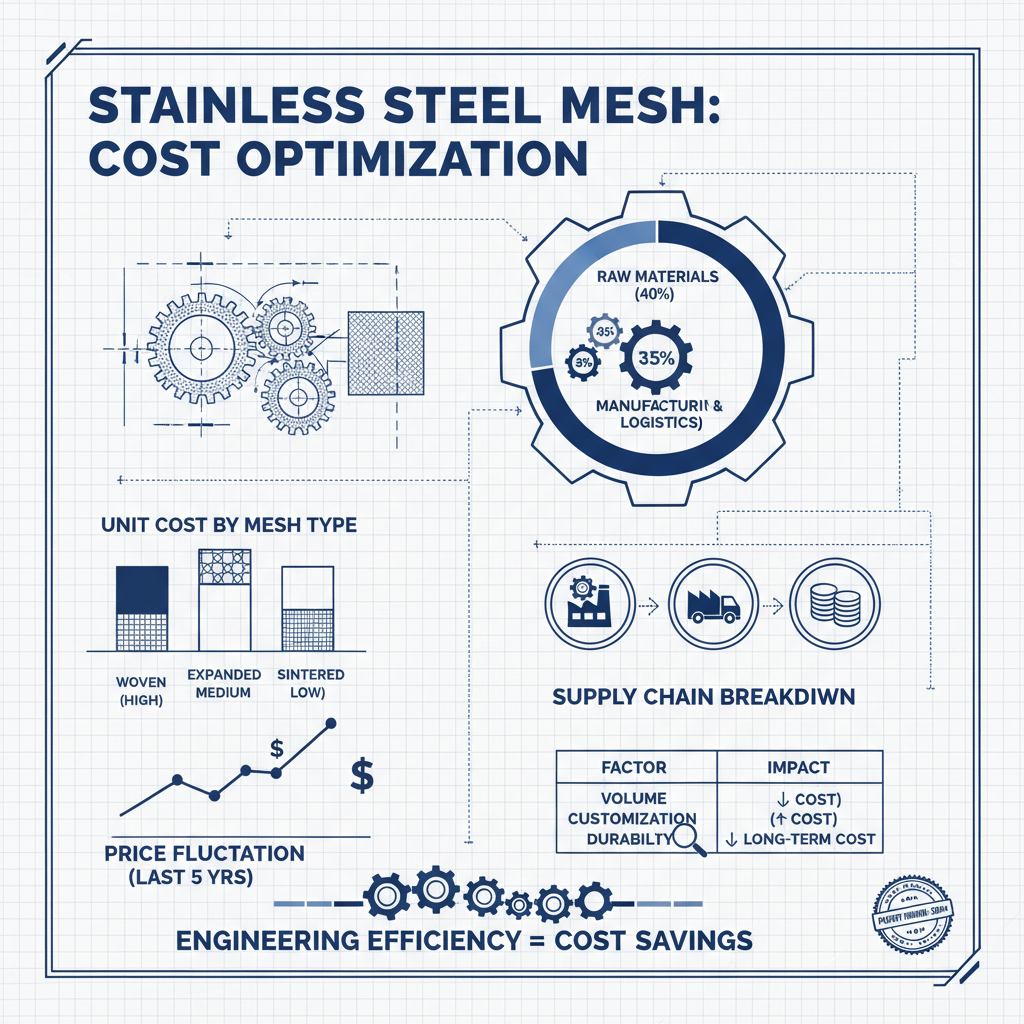
Stainless steel mesh cost encompasses all expenses associated with acquiring and preparing the mesh for its intended application. This includes the raw material price (stainless steel grade), manufacturing costs (weaving, cutting, welding), finishing treatments (polishing, passivation), and transportation expenses. It's not merely the price per square foot but a holistic assessment of all contributing factors.
The definition extends beyond the initial purchase price to consider the total cost of ownership. This includes factors like longevity, maintenance requirements, and potential replacement costs. A seemingly cheaper mesh might have a higher total cost of ownership if it requires frequent repairs or has a shorter lifespan.
Understanding these nuances is particularly important in industries where material reliability is paramount, such as the food and beverage industry, where sanitation and durability are critical. Stainless steel mesh cost directly impacts the final product's quality and adherence to stringent industry regulations.
Core Components Influencing Cost
Several key components significantly influence stainless steel mesh cost. The grade of stainless steel itself is a major determinant. Grades like 304 and 316, known for their corrosion resistance, typically command higher prices than lower grades. Alloy composition directly impacts the mesh's performance and therefore its price.
The weave pattern also plays a crucial role. Plain weaves are generally less expensive than more complex weaves like twill or Dutch weaves, which require more intricate manufacturing processes. Mesh count (the number of wires per inch) also affects the cost; higher mesh counts, offering finer filtration, are typically more expensive. Furthermore, the wire diameter contributes to the overall cost – thinner wires require more precise manufacturing.
Finally, finishing processes like polishing or passivation add to the cost. These treatments enhance the mesh's corrosion resistance and aesthetic appeal but require additional labor and materials. The overall quantity ordered also impacts pricing – larger orders typically benefit from economies of scale.
Applications and Global Impact
Stainless steel mesh finds applications in a vast array of industries worldwide. In water filtration, it removes impurities and ensures safe drinking water. In food processing, it’s used for sieving, sorting, and conveying materials, maintaining hygiene and quality control. Pharmaceutical manufacturers utilize it for filtration and separation processes, meeting stringent purity standards.
Globally, regions with rapidly expanding industrial sectors, such as Asia-Pacific, are driving significant demand. Countries like China and India are major consumers of stainless steel mesh, utilizing it in infrastructure development, manufacturing, and environmental protection projects. In post-disaster relief operations, stainless steel mesh can be integrated into temporary shelter solutions and water purification systems, offering rapid and effective support.
Comparative Stainless Steel Mesh Cost Analysis
Advantages and Long-Term Value
Investing in high-quality stainless steel mesh offers numerous advantages extending beyond initial cost considerations. Its inherent corrosion resistance ensures a longer lifespan, reducing the frequency of replacements and minimizing downtime. This translates to long-term cost savings and increased operational efficiency.
Moreover, stainless steel mesh contributes to improved product quality and safety, particularly in critical applications like food and pharmaceutical processing. Its durability and reliability inspire confidence and trust in end-users, enhancing brand reputation and fostering customer loyalty.
Future Trends in Stainless Steel Mesh Cost
The future of stainless steel mesh cost is intertwined with advancements in materials science and manufacturing technologies. We can anticipate the development of new stainless steel alloys with enhanced corrosion resistance and improved formability, potentially lowering production costs. Automation and robotics in manufacturing processes are also expected to contribute to increased efficiency and reduced labor costs.
The growing emphasis on sustainability will drive demand for recycled stainless steel mesh, offering a more environmentally friendly and potentially cost-effective alternative. Digital technologies, such as predictive maintenance and supply chain optimization, will play an increasingly important role in managing costs and ensuring timely delivery.
Furthermore, the exploration of alternative mesh materials, such as titanium alloys and polymer meshes, could introduce new competitive pressures and potentially impact the pricing of stainless steel mesh in specific applications.
Challenges and Potential Solutions
Despite its advantages, several challenges impact stainless steel mesh cost. Fluctuations in raw material prices, particularly nickel, can significantly affect the overall cost. Supply chain disruptions and geopolitical instability can also lead to price volatility and delays. Maintaining consistent quality control throughout the manufacturing process is crucial but can add to production costs.
To mitigate these challenges, businesses can adopt several strategies. Diversifying sourcing options and establishing long-term contracts with suppliers can help stabilize prices. Investing in advanced inventory management systems can optimize stock levels and reduce the risk of shortages. Implementing robust quality control procedures and embracing lean manufacturing principles can improve efficiency and minimize waste.
Exploring collaborative partnerships with suppliers and research institutions can foster innovation and accelerate the development of cost-effective solutions. Ultimately, a proactive and adaptable approach is essential to navigate the complexities of the stainless steel mesh market.
Summary of Key Challenges and Solutions Related to Stainless Steel Mesh Cost
| Challenge |
Impact on Stainless Steel Mesh Cost |
Potential Solution |
Implementation Difficulty (1-10) |
| Raw Material Price Volatility |
Significant fluctuations in nickel and other alloy costs. |
Long-term contracts, diversified sourcing, hedging strategies. |
7 |
| Supply Chain Disruptions |
Delays in delivery, increased transportation costs. |
Multi-sourcing, regional sourcing, robust inventory management. |
6 |
| Quality Control Issues |
Increased scrap rates, rework, potential product failures. |
Statistical process control, automated inspection systems, employee training. |
5 |
| Manufacturing Inefficiencies |
Higher labor costs, increased energy consumption, waste generation. |
Lean manufacturing principles, automation, process optimization. |
8 |
| Geopolitical Instability |
Trade restrictions, tariffs, political risks. |
Diversified geographical sourcing, political risk assessment. |
9 |
| Lack of Transparency |
Difficulty in understanding cost breakdowns, potential for hidden fees. |
Detailed cost analysis, transparent supplier relationships, independent auditing. |
4 |
FAQS
The primary drivers of stainless steel mesh cost are the grade of stainless steel (304, 316, etc.), the weave pattern (plain, twill, Dutch), the mesh count, and any finishing treatments applied. Raw material price fluctuations, particularly for nickel, also heavily influence overall cost. Efficient manufacturing processes and order volume contribute as well.
Optimizing mesh selection based on application requirements is key. Sometimes a simpler weave pattern or a slightly lower grade of stainless steel can suffice. Negotiating long-term contracts with suppliers and leveraging volume discounts can also reduce costs. Exploring alternative suppliers and conducting thorough cost analyses are also recommended strategies.
Lead times vary considerably based on order complexity, material availability, and the supplier’s production schedule. Generally, standard mesh sizes are readily available with short lead times (1-2 weeks). Custom orders, particularly those requiring specific weave patterns or dimensions, can take 4-8 weeks or longer.
Higher mesh counts, indicating finer openings, generally increase the stainless steel mesh cost. This is because producing finer mesh requires more precise weaving processes and a higher density of wires. However, a higher mesh count also delivers improved filtration or separation capabilities, making it worthwhile for specific applications.
316 stainless steel contains molybdenum, which significantly enhances its corrosion resistance, especially in chloride environments. This makes it ideal for applications exposed to saltwater, harsh chemicals, or acidic conditions. While 316 is generally more expensive than 304, its superior durability and longevity can result in lower long-term costs.
Yes, sourcing stainless steel mesh made from recycled materials is an increasingly viable option. Many suppliers now offer mesh produced from post-consumer or post-industrial stainless steel scrap, reducing environmental impact and potentially lowering costs. Inquire with your supplier about their sustainability practices and material sourcing.
Conclusion
Understanding stainless steel mesh cost is not merely about finding the cheapest price; it’s about strategically balancing cost, quality, performance, and long-term value. By carefully considering factors like material grade, weave pattern, and application requirements, businesses can make informed decisions that optimize their investments and achieve sustainable results. The nuances surrounding stainless steel mesh cost are significant and have a direct impact on operational efficiency, product quality, and overall profitability.
Looking ahead, embracing innovative manufacturing technologies, exploring sustainable sourcing options, and fostering transparent supplier relationships will be crucial for navigating the evolving stainless steel mesh market. Investing in knowledge and proactive cost management will empower organizations to thrive in a competitive landscape. Visit our website at stainless steel mesh cost to learn more and explore our comprehensive range of stainless steel mesh solutions.