Look, I’ve been on construction sites for fifteen years, alright? Fifteen years of dust, concrete, and listening to guys complain about their knees. And lately… lately, everyone’s talking about wedge wire. Not new, exactly. Been around. But the demand? It’s gone through the roof. Seems like every engineer is specifying it for screening, filtration, even architectural stuff. To be honest, it's a little exhausting keeping up with all the new applications.
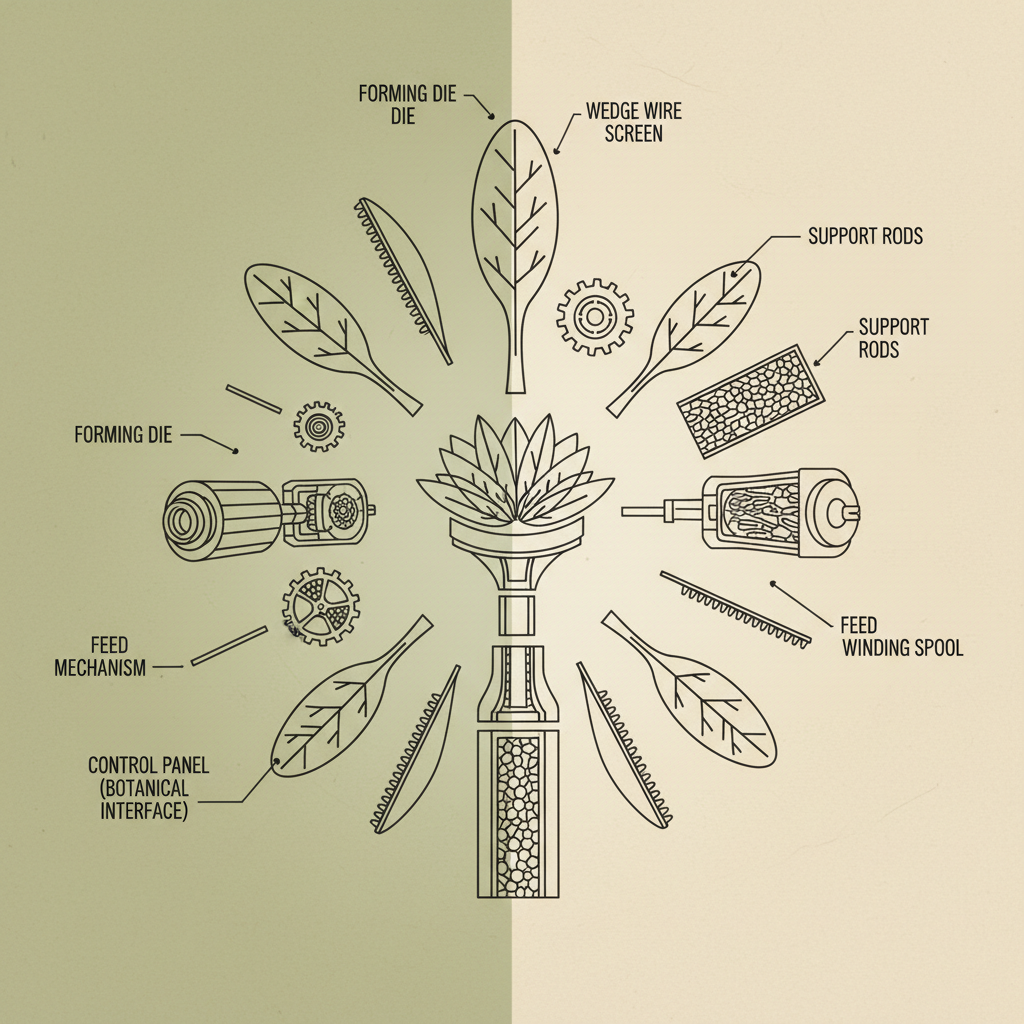
It’s funny, you spend all this time designing something in the office, thinking you've solved every problem, then you get on-site and… well, reality hits. I’ve seen so many designs fall apart because people don’t understand the stresses involved. Especially with these wedge wire systems. It’s not just about the wire itself, it’s how it’s welded to the support rods. That's where the real headaches start.
And the materials. You’ve got your 304 stainless, the standard. Feels… slick, you know? Always a little cold to the touch. Then there’s 316, more corrosion resistance, especially if you're near saltwater. That one has a slightly different smell when you're welding, a bit metallic. But then you start getting into the duplex stainlesses, and honestly, it gets confusing. They're tougher, but harder to work with. We used a lot of Hastelloy C-276 on a desalination plant project last year. Now that stuff is a pain. Super corrosion-resistant, yeah, but brittle. You have to be incredibly careful with bending and forming.
Industry Trends and Common Design Pitfalls
Have you noticed how much demand there is for finer filtration these days? Microplastics, water purity… everyone’s obsessed. That drives the need for tighter wedge wire slots, and that's where things get tricky. It's easy to specify a really fine slot, but manufacturing that reliably? That’s a different story. The welding gets really sensitive, and you see a lot of warping and distortion.
I encountered this at a wastewater treatment plant in Texas last time. They wanted 0.1mm slots. Beautiful on paper, but the screens kept failing within weeks. Turns out the welding process was introducing too much stress, and the slots were opening up. They ended up going with slightly larger slots and a more robust welding technique. Later… Forget it, I won't mention the arguments that followed.
Material Selection: A Hands-On Perspective
It's not always about the most expensive material, you know? Sometimes the simpler stuff works just fine. A lot of guys jump straight to the high-alloy stainlesses, thinking they’re solving all their problems. But if you’re not dealing with highly corrosive environments, you’re just wasting money. And frankly, those high-alloy steels can be a nightmare to weld.
I always tell the younger engineers, “Feel the material.” Seriously. Get your hands dirty. 304 feels different than 316, and you can start to get a sense of its properties just by handling it. You can tell a good quality sheet from a cheap one just by the weight and the way it bends. And don’t underestimate the importance of surface finish. A rough surface can create turbulence and reduce filtration efficiency.
Strangely enough, sometimes carbon steel with a good coating can be more effective – and cheaper – than trying to use a fancy alloy. But you have to make sure the coating is applied properly and that it can withstand the operating conditions. It's a balancing act, really.
Real-World Testing and Performance
Lab tests are fine, I guess. But they don’t tell you what happens when you've got a clogged screen, a leaking flange, and a foreman breathing down your neck. We do a lot of field testing. Pressure drop tests, visual inspections, flow rate measurements. Simple stuff, but it gives you a real sense of how the system is performing.
We also simulate real-world conditions. If it's going to be exposed to saltwater, we soak it in saltwater for a week and then inspect it for corrosion. If it's going to be used in a high-temperature environment, we run it at that temperature for an extended period. I remember one test where we had to bury a section of wedge wire screen in sand for six months to see how it would hold up against abrasion. It was a mess.
Anyway, I think the most important thing is to listen to the operators. They're the ones who are actually using the system day in and day out. They'll tell you what's working and what's not. Often, their observations are far more valuable than any data you can collect in a lab.
Actual Usage vs. Intended Usage
This is a big one. Engineers design these systems with a specific flow rate, particle size, and operating pressure in mind. But in the real world, things rarely go according to plan. People overload the system, they use it for applications it wasn’t designed for, they just don’t follow the operating procedures.
I've seen guys use wedge wire screens to filter everything from wastewater to orange juice. Seriously. And then they wonder why the screens clog up and fail. It's frustrating, but you have to expect it. That’s why it’s important to design for a margin of safety and to provide clear instructions on how to operate the system properly.
Wedge Wire Performance Metrics
Advantages, Disadvantages, and Customization Options
Look, wedge wire has a lot going for it. High flow rates, low pressure drop, self-cleaning… it’s a good design. But it’s not perfect. It can be expensive, especially for complex geometries. And if you don’t get the welding right, it can fail spectacularly.
Customization is definitely possible, though. We've done everything from changing the slot width and wire profile to adding different support structures and coatings. I had a customer last year who wanted a wedge wire screen with a built-in heating element to prevent ice buildup. It was a challenging project, but we got it done. He was building a fish farm in Alaska, apparently.
A Customer Story: The Debacle
Last month, that small boss in Shenzhen who makes smart home devices insisted on changing the interface to on a new filter housing. He was convinced it was the future, all sleek and modern. It was for a water purifier, mind you. I tried to tell him, “Look, the standard connector is perfectly fine, it’s reliable, it’s cheap.” But he wouldn’t listen.
He wanted a flush, waterproof connector integrated into the housing. We built it, of course. We’re in the business of building things. But within a week, he was calling me screaming. Apparently, the connector was getting clogged with mineral deposits, and the water purifier wasn’t working. He ended up having to recall the entire batch and redesign the housing. Cost him a fortune.
Sometimes, the simplest solution is the best. And sometimes, customers just need to be told "no".
Practical Considerations and Final Thoughts
So, what does all this mean? Well, wedge wire is a powerful technology, but it's not a magic bullet. You need to understand the materials, the manufacturing processes, and the application. You need to listen to the operators and be prepared to adapt to changing conditions.
We can spend all day running simulations and performing lab tests, but at the end of the day, it's the guy on the construction site who knows what’s really going on. He's the one who’s going to see if the welds are holding up, if the screen is clogging, if the system is actually working as intended.
Summary of Key Considerations for Wedge Wire Performance
| Material Grade |
Welding Quality |
Operating Environment |
Maintenance Frequency |
| 304 Stainless Steel |
Consistent and uniform welds |
Freshwater, Low Chloride Content |
Monthly Inspection/Cleaning |
| 316 Stainless Steel |
Automated Welding Processes |
Saltwater, Moderate Chloride Content |
Bi-Weekly Inspection/Cleaning |
| Duplex Stainless Steel |
Experienced Welders Required |
Highly Corrosive Environments |
Regular Corrosion Monitoring |
| Hastelloy C-276 |
Specialized Welding Techniques |
Extreme Chemical Exposure |
Frequent Inspection for Cracking |
| Carbon Steel (Coated) |
Coating Integrity is Critical |
Mildly Corrosive Environments |
Regular Coating Inspection/Repair |
| Titanium Alloys |
High Precision Welding |
Marine Applications, Seawater |
Minimal Maintenance Required |
FAQS
Honestly, the biggest issues are usually related to welding defects. Cracks, porosity, incomplete fusion... Those can all lead to premature failure. Another common problem is abrasion, especially if you’re dealing with abrasive solids. And, of course, corrosion is always a concern, depending on the environment. Proper material selection and a good quality control program are key to preventing these failures.
It’s a balancing act. Smaller slots provide finer filtration, but they also clog more easily and are more prone to warping. We usually start by considering the particle size distribution of the fluid being filtered. Then, we factor in the flow rate, pressure drop, and the potential for solids buildup. There are some empirical formulas you can use, but ultimately, it often comes down to trial and error.
Sometimes. Minor damage, like a small crack or dent, can often be repaired by welding. But if the damage is extensive, or if the screen is severely corroded, it’s usually more cost-effective to replace it. It really depends on the severity of the damage and the cost of a new screen.
The V-shaped wires create a continuous slot that's less prone to clogging than flat wires. They also provide a more uniform flow distribution. Flat wires can sometimes create dead spots where solids can accumulate. However, V-shaped wires are typically more expensive to manufacture.
Absolutely critical. The support structure provides the rigidity and strength that the screen needs to withstand the operating pressures and loads. If the support structure is too weak, the screen will deform and fail. We often use different types of support structures depending on the application and the operating conditions.
High temperatures can cause the metal to creep and deform, especially under stress. Certain materials are better suited for high-temperature applications than others. Also, the welding becomes more challenging at higher temperatures. It’s important to carefully consider the material properties and the welding process when designing a wedge wire screen for a high-temperature environment.
Conclusion
So, that’s wedge wire in a nutshell. It's a versatile and effective filtration technology, but it’s not a one-size-fits-all solution. You need to understand the materials, the manufacturing processes, and the application. You need to listen to the operators and be prepared to adapt to changing conditions. Ultimately, it's all about finding the right balance between performance, cost, and reliability.
Don’t get me wrong, a fancy design and precise specifications are important. But at the end of the day, whether this thing works or not, the worker will know the moment he tightens the screw. If it feels right, if it looks right, if it sounds right… then you’re probably on the right track. And if it doesn't... well, you've got another problem to solve.