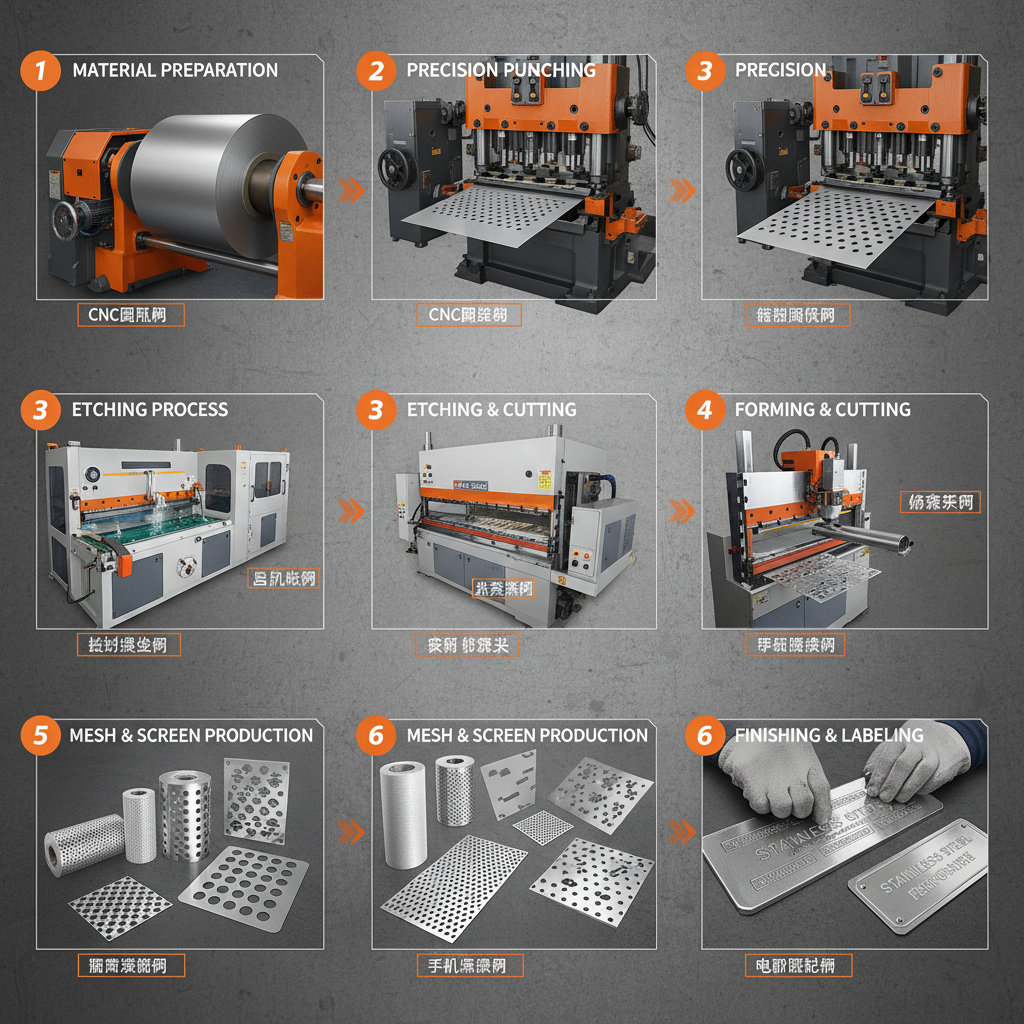
To be honest, the whole expanded mesh factory scene is… changing. Used to be, everyone just wanted the cheapest stuff, right? Bulk orders, no frills. But lately, it’s all about customization, quick turnaround, and surprisingly, sustainability. It's a shift. I saw it first at a pre-fab housing expo in Shanghai last fall. Loads of architects talking about eco-friendly materials and modular builds. It’s not just about price anymore, it’s about the whole lifecycle.
Have you noticed how everyone's chasing fast deployment housing? Disaster relief, refugee camps, even temporary hospitals. Speed is everything, and that's where expanded mesh really shines. But getting it right… that’s the tricky part.
The Current Landscape of expanded mesh factory
Strangely enough, the biggest demand I'm seeing isn't necessarily for more expanded mesh, but for more specialized expanded mesh. Things like different alloys for corrosion resistance, tighter tolerances for precision applications, even coatings for specific environmental conditions. The pressure’s on to deliver that level of sophistication consistently.
It's also funny... everyone’s talking about "Industry 4.0" and automation, but a lot of these factories are still incredibly manual. It’s a weird mix of high-tech demands and low-tech processes. I encountered this at a small expanded mesh factory in Ningbo last time. They were trying to implement a new laser-cutting system, but the operator was still relying on a ruler and his gut feeling to adjust the settings. Anyway, I think that's a pretty accurate snapshot of where things stand.
Design Pitfalls and Common Mistakes
Oh boy, the design mistakes. You wouldn't believe. One of the biggest? Underestimating the expansion and contraction of the material. Especially with stainless steel. You design a perfectly fitted panel, and then the temperature shifts, and suddenly it’s warped and stressing the whole structure. That's a classic.
Another one is ignoring the long-term effects of galvanic corrosion. Mixing different metals without proper insulation? Disaster waiting to happen. I’ve seen entire facades start to fall apart because of that. And then there’s the whole issue of edge treatment. Sharp edges are a safety hazard, obviously, but even seemingly minor burrs can cause fatigue cracks over time.
People often forget about the tooling costs too. Designing something that looks great on paper, but requires insanely expensive custom tooling to manufacture? That’ll kill a project fast. Always, always check with the factory early in the design process to see what’s feasible and what’s not.
Material Selection: Beyond the Spec Sheet
Okay, so you've got your stainless steels, your aluminum alloys, your galvanized steel… but the spec sheet only tells you half the story. The feel of the material is important. Is it springy enough? Does it have the right surface texture? Does it smell like… well, metal, or something else weird? Seriously, I've encountered some batches that smelled faintly of sulfur.
And handling is key. Some alloys are incredibly sticky when they’re being cut, making the process slow and messy. Others are brittle and prone to shattering. You learn these things by getting your hands dirty. I once spent a whole day just trying to figure out how to properly deburr a particularly nasty aluminum alloy.
Don’t underestimate the importance of the coating, either. A good powder coat can add years to the lifespan of a product, but a cheap one will flake off after a few months. I've seen it. Every. Single. Time. You pay a little extra upfront, you save a lot of headaches later.
Real-World Testing and Performance Analysis
Lab tests are fine, sure. But they don't tell you how something will actually perform in the real world. We need to see it beat up, rained on, sun-baked, and generally abused. That's where field testing comes in. I’m a big fan of putting prototypes in harsh environments and just… letting them sit.
I remember one project where we were designing expanded mesh for a coastal walkway. The engineers wanted to run corrosion tests in a salt spray chamber. I said, “Forget the chamber, let’s just bury a sample in the sand for six months.” That told us a lot more. We found out the original alloy corroded like crazy, and we had to switch to a more expensive, but much more durable, alternative.
expanded mesh factory Performance Metrics
User Behavior: The Unexpected Truths
You think people will use your product the way you intended? Ha! Never. I've seen expanded mesh used as everything from garden trellises to makeshift barbecue grills. Seriously.
And the amount of stuff people try to attach to expanded mesh is unbelievable. Lights, signs, plants, bird feeders… you name it. That’s why you have to design for overload. Don't just assume people will follow the instructions. They won’t. They'll improvise.
Advantages, Disadvantages, and Customization Options
Okay, let’s be real. Expanded mesh is strong, lightweight, and relatively affordable. It’s great for ventilation, filtration, and creating a non-slip surface. But it can also be noisy – especially when walked on. And it's not always the most aesthetically pleasing material. Let’s face it, it looks… industrial.
Customization is where it gets interesting, though. I had a customer last year who wanted to use expanded mesh as a facade for a high-end restaurant. They wanted a very specific pattern and a custom powder coat color. It was tricky, but we managed to pull it off. We even incorporated LED lighting behind the mesh to create a really unique effect. It's possible, you just have to be willing to pay for it.
Case Study: Customization Gone Right (and Wrong)
Last month, that small boss in Shenzhen who makes smart home devices insisted on changing the interface to , and the result was… a disaster. He wanted a super-sleek, modern look, so he ditched the standard screw holes and had us create a completely flush-mounted expanded mesh panel. Sounded good on paper. But it turns out, that flush mount made the panel incredibly difficult to install and remove for maintenance.
The technicians were cursing his name. They spent hours trying to get the thing aligned, and when they finally did, they couldn't get it open without damaging the surrounding plastic. He'd prioritized aesthetics over functionality, and it backfired spectacularly. We tried to warn him, but he wouldn’t listen.
Then, on the other hand, we had a client in Australia building emergency shelters. They needed a way to quickly secure tarpaulins to a metal frame. We designed a custom expanded mesh with integrated clips that allowed them to attach and detach the tarps in seconds. That was a win. Saved them a ton of time and effort. Ultimately, whether this thing works or not, the worker will know the moment he tightens the screw.
Key Comparison of Expanded Mesh Material Properties
| Material Type |
Corrosion Resistance (1-10) |
Strength-to-Weight Ratio (1-10) |
Cost (Low/Medium/High) |
| Carbon Steel |
4 |
7 |
Low |
| Galvanized Steel |
6 |
6 |
Medium |
| Aluminum 5052 |
8 |
8 |
Medium |
| Stainless Steel 304 |
9 |
6 |
High |
| Stainless Steel 316 |
10 |
6 |
High |
| Aluminum 6061 |
7 |
9 |
Medium |
FAQS
Honestly? Not factoring in the environment. If it's near saltwater, you need 316 stainless. Don't try to cheap out. It will bite you in the end. And always, always specify the opening size accurately. A seemingly small difference can make a huge impact on functionality.
Yes, but it's tricky. You need to use the right welding technique and filler material to avoid distortion and weakening the mesh. It's not something you want just anyone attempting. I've seen some truly horrific welds in my time. Always consult with a qualified welder.
Depends. A simple custom size might take a couple of weeks. But if you're talking about a unique pattern, a specific alloy, and a custom finish… it could easily be six to eight weeks, or even longer. Plan ahead!
Galvanizing is a good start, but it's not foolproof. For really harsh environments, stainless steel is the way to go. You can also apply a protective coating, like powder coating or epoxy. Regularly cleaning and maintaining the mesh will also help extend its lifespan.
Good question. Flattened is, well, flattened. It's more stable and easier to walk on. Raised is stronger but can be a trip hazard. It depends on the application. For walkways, always go with flattened. For security fencing, raised might be better.
Increasingly, yes. Recycled aluminum is becoming more common, and some manufacturers are using more eco-friendly coatings. It's still not perfect, but it's a step in the right direction. Look for suppliers who are committed to sustainability.
Conclusion
So, expanded mesh isn’t just a material; it’s a compromise. A balance between strength, weight, cost, and functionality. The industry is evolving, pushing for more customization, sustainability, and a deeper understanding of real-world performance. It's not always glamorous work, getting your hands dirty on construction sites, but it’s rewarding when you see a project come together.
Look, at the end of the day, the spec sheets and the lab tests are important, but they don’t tell the whole story. It all comes down to practicality. Ultimately, whether this thing works or not, the worker will know the moment he tightens the screw. Want to learn more about what we can do? Visit our website: expanded mesh factory.