Advanced punched metal panels Solutions for Saudi Arabia Infrastructure

Precision-engineered structural metal solutions designed to withstand the extreme climates of the Arabian Peninsula, ensuring durability and architectural excellence.

Advanced punched metal panels Solutions for Saudi Arabia Infrastructure

We provide high-performance perforated metal components tailored for Saudi Arabia's unique construction standards, focusing on corrosion resistance and thermal management.

Market Status of Perforated Metal in Saudi Arabia

Analyzing the intersection of extreme desert climates and rapid urban expansion.

In Saudi Arabia, the demand for perforated mesh metal is driven by the Vision 2030 initiative, where massive giga-projects like NEOM and The Line require materials that balance ventilation with solar shading. The high salinity in coastal areas and extreme heat in the interior necessitate advanced coatings.

The local industry is transitioning from basic utilitarian screens to complex architectural facades. There is a critical need for perforated aluminium plate due to its lightweight nature and superior resistance to the oxidative stress caused by sandstorms and high humidity.

Currently, the market sees a shift toward customized hole patterns to optimize airflow in HVAC systems, reducing energy consumption for cooling—a primary concern for structural metal manufacturers operating within the Kingdom's energy-efficiency frameworks.
Evolution of Metal Fabrication Technology

From manual punching to CNC-driven precision engineering.

Market Development History

In the early 2000s, Saudi metal works relied heavily on imported basic grids. The focus was primarily on security fencing and simple industrial filtration using standard square perforated sheet designs with limited customization.

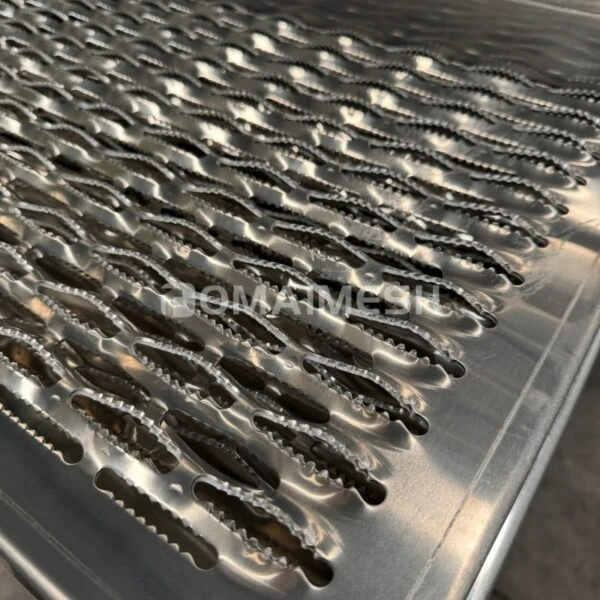
Between 2010 and 2020, the introduction of high-precision CNC punching machines allowed for the creation of slotted perforated metal, enabling architects to integrate functional airflow with aesthetic linear designs in commercial hubs like Riyadh and Jeddah.

Today, the industry has evolved into "Smart Fabrication," where BIM (Building Information Modeling) is used to calculate the exact open-area percentage required for heat dissipation, leading to a surge in high-spec structural metal products.

Future Development Trends

AI-Optimized Perforation Patterns

Integration of generative design to create patterns that maximize wind permeability while blocking 80% of direct solar radiation.

Sustainable Alloy Integration

A shift toward recycled aluminium and high-grade stainless steels to meet the "Green Saudi" environmental targets.

Advanced Nano-Coatings

Development of self-cleaning, hydrophobic coatings to prevent sand accumulation on perforated surfaces in desert environments.

Industry Outlook and Future Trajectory

Projecting the next 5 years of structural metal manufacturing in the region.

Thermal Efficiency Focus
Increasing search trends for "solar shading metal" suggest a move toward variable-density perforations to lower building cooling costs.
Modular Construction
The rise of prefabricated modules requires standardized, precision-punched panels for rapid on-site assembly in new urban zones.
Anti-Corrosive Materials
Growing demand for marine-grade alloys in the Red Sea and Persian Gulf coastal developments to prevent saltwater oxidation.
Digital Twin Integration
Linking physical perforated panels to digital twins for real-time monitoring of airflow and structural integrity in smart cities.

Industry Outlook

The next 3-5 years will see a convergence of metallurgy and software. As Saudi Arabia pushes toward carbon neutrality, the structural metal sector will prioritize materials that facilitate natural cooling, reducing the carbon footprint of the built environment.

Data suggests a significant increase in searches for "sustainable architectural cladding," indicating that the market is moving away from generic plates toward high-performance, engineer-specified perforated systems.

Localized Applications in Saudi Arabia

Real-world implementations of perforated metal in the Kingdom's diverse landscape.

1. Solar Shading for Riyadh Commercial Hubs

Using high-density perforated aluminium plates to create external "skins" for office buildings, reducing heat gain and air conditioning load.

2. Industrial Filtration for Oil & Gas Plants

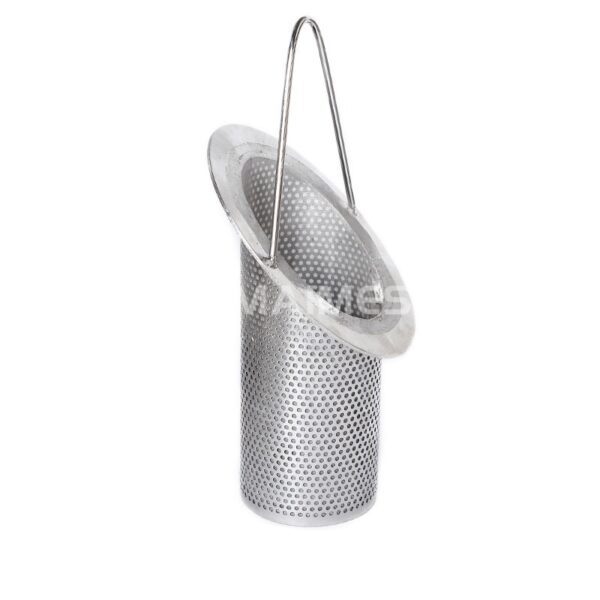
Implementing heavy-duty stainless steel perforated mesh metal for primary filtration in petrochemical refineries in Jubail and Yanbu.

3. Acoustic Buffers for Metro Stations

Utilizing slotted perforated metal panels in transit hubs to manage noise pollution while maintaining ventilation in underground spaces.

4. Urban Furniture for Public Parks

Applying powder-coated square perforated sheets for weather-resistant seating and decorative screens in "Green Riyadh" city parks.

5. Security Screening for Government Facilities

Deploying reinforced punched metal panels for high-security perimeter fencing that allows visibility but prevents unauthorized entry.

Brand Story

Global Development Journey of Anping Tongmai Wire Mesh Products Co., Ltd.

Foundational Excellence

Started with a commitment to precision weaving and punching, establishing a reputation for rigorous quality control in structural metal fabrication.

Technological Leap

Invested in advanced CNC technology to move from standard mesh to complex architectural perforated panels for global clients.

Global Expansion

Expanded operations into the Middle East, tailoring products to solve the specific corrosion and heat challenges of Saudi Arabia.

Sustainability Pivot

Developed a range of eco-friendly alloys and low-emission manufacturing processes to align with global green building standards.

Visionary Leadership

Now leading the industry in providing integrated structural metal solutions that combine aesthetic beauty with extreme environmental durability.

Comprehensive Metal Portfolio for Saudi Arabia

A curated selection of structural metal products engineered for the Arabian Gulf environment.

Saudi Arabia Metal Fabrication FAQ

Technical answers to common regional challenges in structural metal installation.

Which material is best for perforated mesh metal in coastal Saudi cities?

For coastal cities like Jeddah, marine-grade stainless steel (316L) or anodized aluminium is highly recommended to resist salt-spray corrosion.

How do punched metal panels help in reducing cooling costs?

By acting as a "brise-soleil," these panels block direct sunlight while allowing natural ventilation, significantly lowering the load on HVAC systems.

What is the difference between slotted perforated metal and square holes?

Slotted patterns provide directional airflow and a linear aesthetic, whereas square patterns are often used for structural rigidity and uniform filtration.

Can perforated aluminium plate be customized for specific architectural patterns?

Yes, using CNC punching, we can create any custom pattern, including parametric designs that vary in hole size across a single panel.

How do I choose the right gauge for a square perforated sheet in industrial use?

The gauge depends on the load-bearing requirement. For flooring or heavy screening, a thicker gauge is required; for acoustic ceilings, a lighter gauge suffices.

What coatings are best for metal panels in desert sandstorm conditions?

PVDF (Polyvinylidene Fluoride) coatings are ideal as they are highly weather-resistant and prevent abrasive sand from damaging the base metal.

Expert Consultation for Metal Solutions

Ready to optimize your structural metal needs in Saudi Arabia? Our engineers are available for technical consultation.

Contact Us Now

If you are interested in our products, you can choose to leave your information here, and we will be in touch with you shortly.