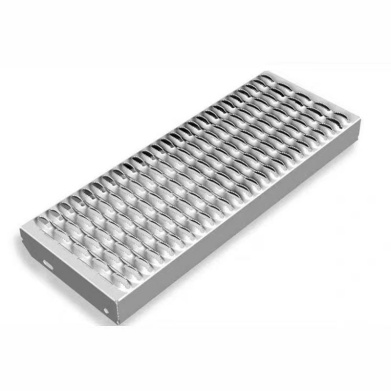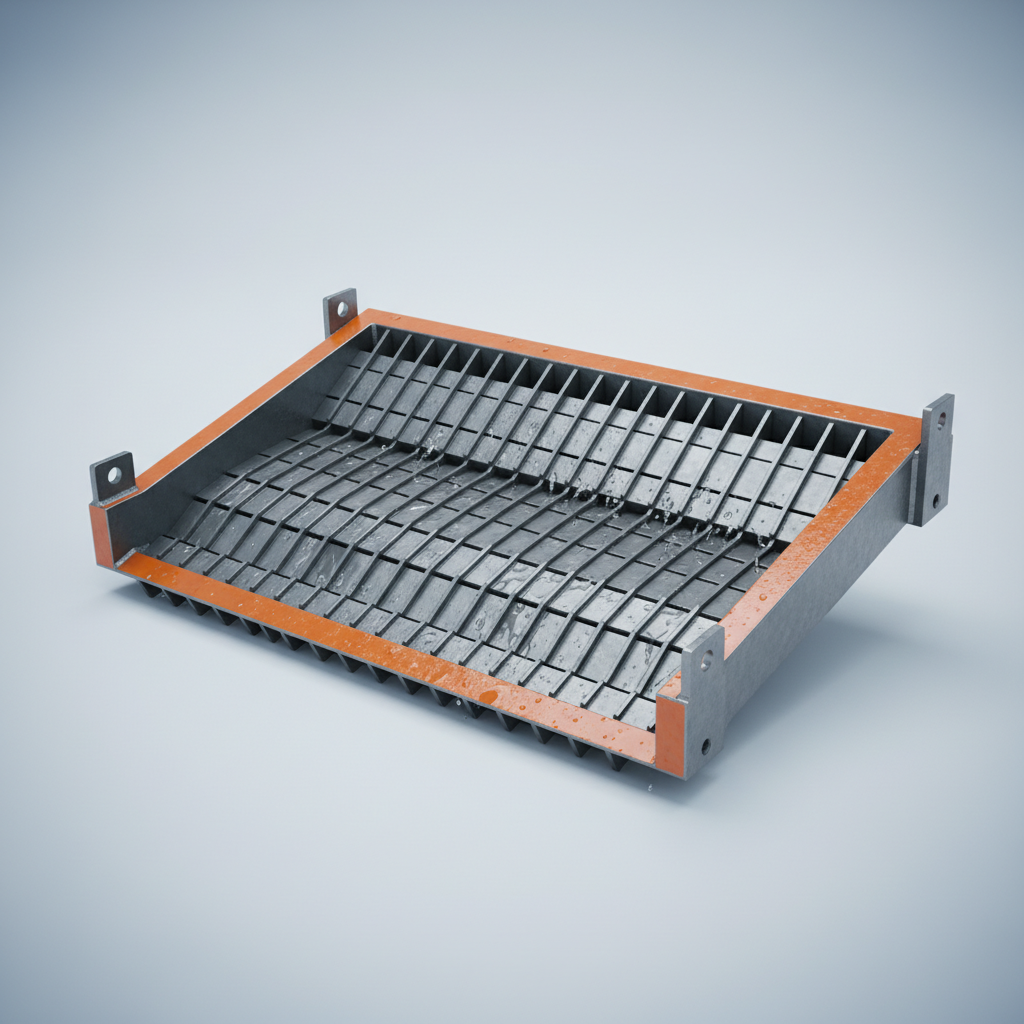
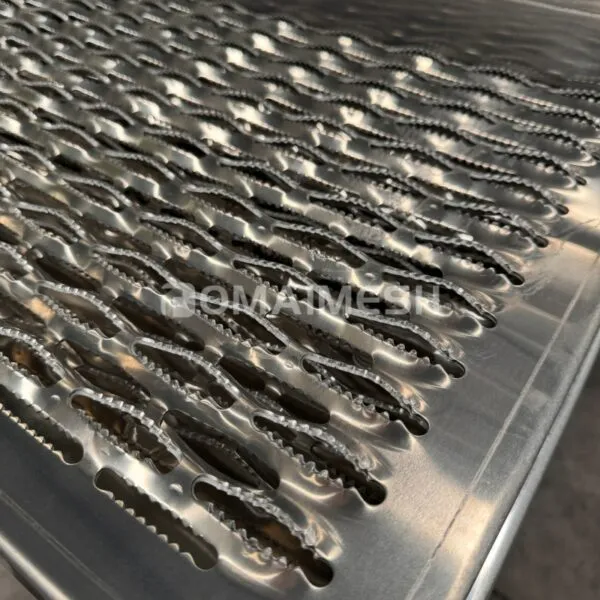
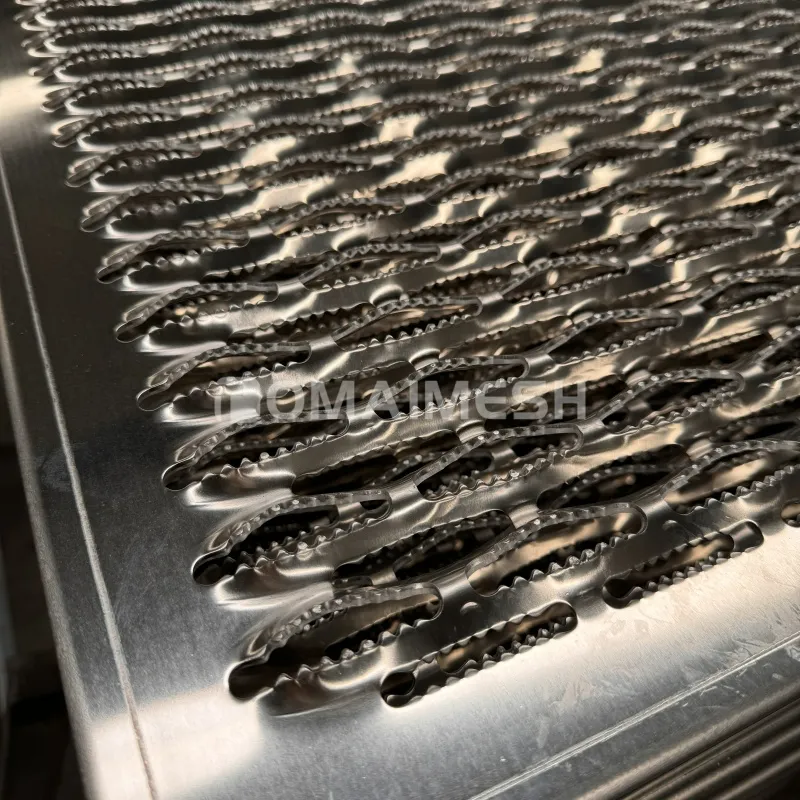
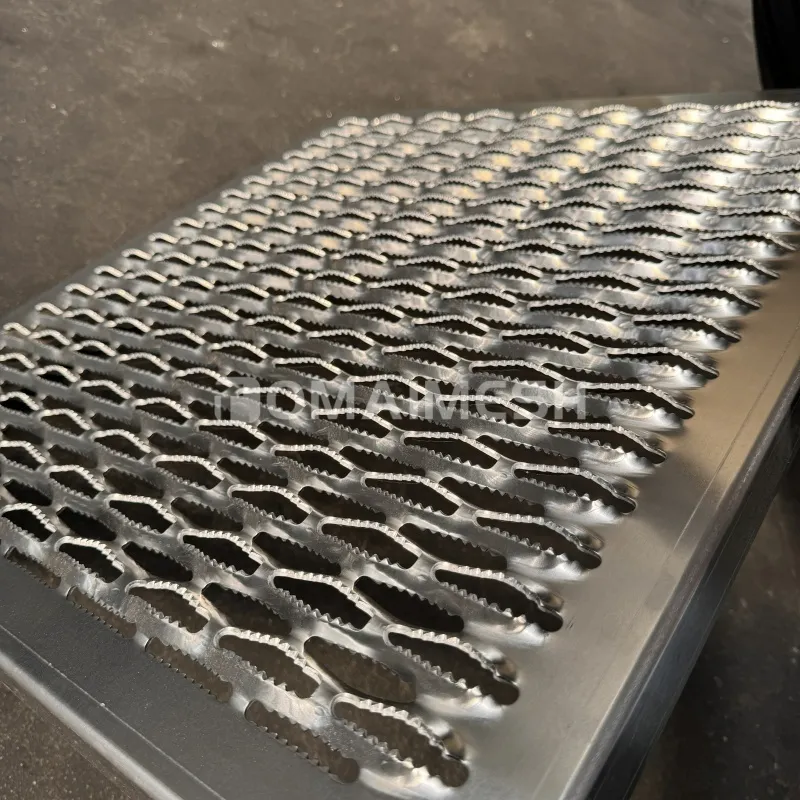
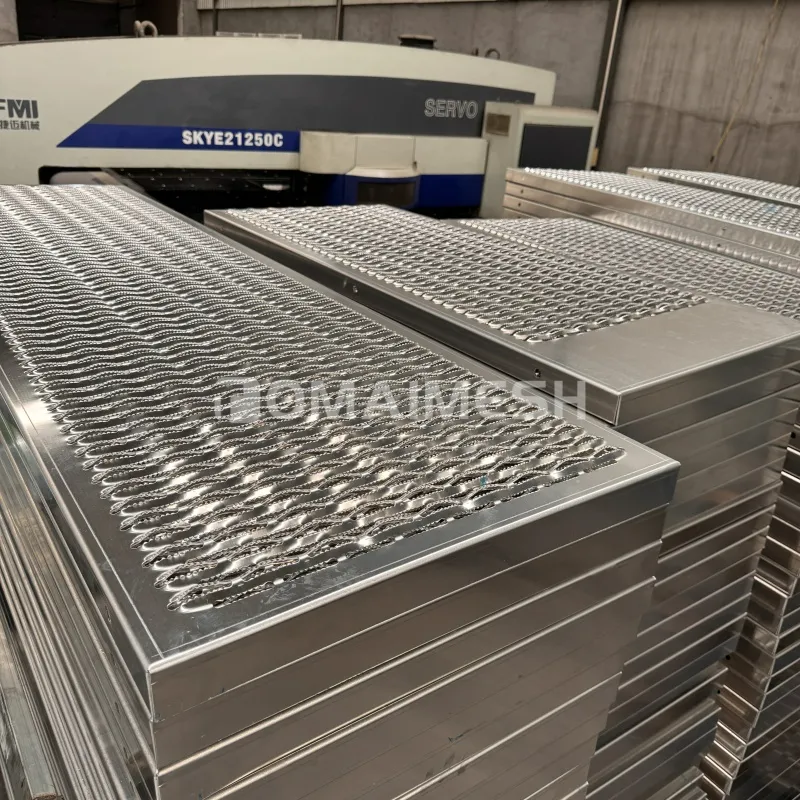
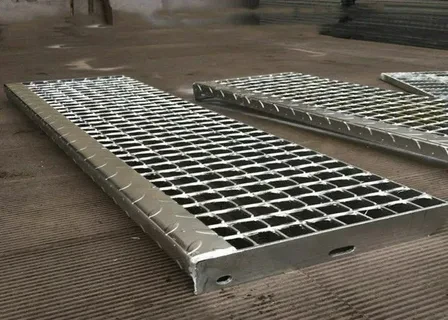
Grating Stair Tread

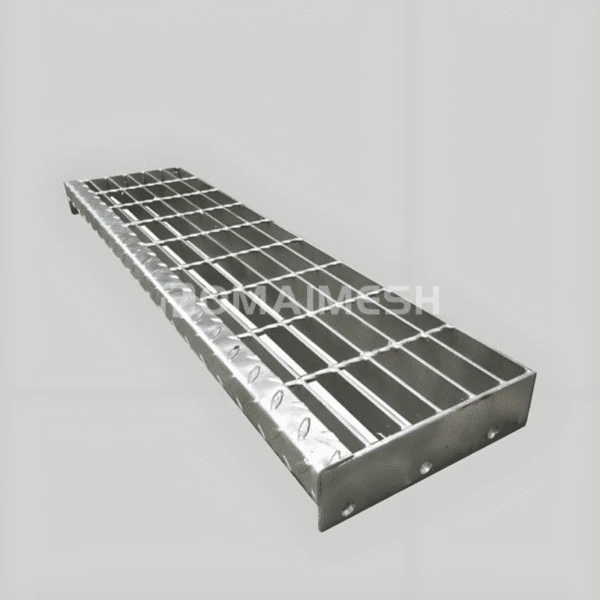
Material: 6061-T6 Aluminum | 304/316 Stainless Steel | Galvanized Steel
Construction: Welded/Pressure-Locked Grid | Serrated Surface (Anti-Slip) 
Specifications: Thickness 25mm-50mm | Tread Width 200mm-600mm 
Load Capacity: Static Load ≤5kN/m² | Dynamic Load ≤3kN/m² 
Surface Treatment: Hot-Dip Galvanized (80-100μm) | Epoxy Coating 
Applications: Industrial Staircases | Offshore Platforms | Chemical Plants

Grating Stair Tread: Material & Construction
  • Heavy-Duty Materials:
    • Hot-Dip Galvanized Steel (ASTM A123): Corrosion-resistant for industrial plants or offshore platforms (coating thickness: 80–100 µm).
    • Stainless Steel 304/316L: PREN ≥18–25 for chemical facilities or food processing plants (Ra ≤1.6 µm surface finish).
    • Aluminum 6061-T6: Lightweight yet durable (tensile strength: 276 MPa) for maritime staircases or temporary access systems.
  • Engineered Safety Features:
    • Serrated or Gripper Surface: R10–R13 slip resistance (DIN 51130) for wet environments or oil & gas platforms.
    • Nose Overhang (20–30 mm): OSHA-compliant design (1910.24) to prevent foot slippage on steep inclines.
    • Closed-End Edges: Eliminate toe traps for ADA/ANSI A117.1 compliance in public infrastructure
Read More About grated metal stair treads
Grating Stair Tread: Performance Advantages
  • Unmatched Safety:
    • Slip Resistance (ASTM F1679): Achieves ≥0.68 dynamic coefficient of friction for refinery stairways or brewery catwalks.
    • High Load Capacity: Supports 5–15 kN/m² for heavy equipment access or crowded pedestrian zones (EN 1993-1-1 compliant).
  • Corrosion & Wear Resistance:
    • Salt Spray Resistance (1,500+ hours, ASTM B117): Ideal for coastal walkways or de-icing salt exposure.
    • Abrasion-Resistant Coatings: Epoxy or polyurethane finishes (ISO 12944 C5-M) for mining staircases or steel mills.
  • Modular Design:
    • Pre-Drilled Mounting Holes: Enables bolt-on installation for retrofitting existing stairs.
    • Interlocking Panels: Seamless alignment for long-span mezzanine stairs or ship ladders.
Grating Stair Tread: Precision Manufacturing & Testing
  • Advanced Fabrication:
    • Robotic Welding (AWS D1.1): Ensures full-penetration joints for high-traffic stair systems.
    • Laser-Cut Profiles: Precision edges (±1 mm tolerance) for snug fit in tight industrial spaces.
  • Rigorous Quality Assurance:
    • Load Testing (EN 1991-1-1): Validates ≤2 mm deflection under 1.5x design load (e.g., 22.5 kN/m²).
    • Slip Testing (EN 1093-5): Certifies R10–R13 ratings for oil-resistant surfaces or frost-prone areas.
    • Coating Thickness Checks (ISO 2178): Ensures ≥80 µm galvanization for 20+ years service life.
  • Custom Solutions:
    • Color-Coded Treads: Powder-coated yellow/black for hazard zone visibility (OSHA 1910.145).
    • Integrated Drainage Slots: Prevent water pooling on outdoor emergency exits.
Read More About grating stair tread
Grating Stair Tread: Industry Applications
  • Oil & Gas:
    • Offshore Platform Stairs: 316L stainless steel treads with serrated surfaces (NORSOK M-501 compliant).
    • Refinery Access Ladders: Galvanized steel treads (R13 rating) with anti-static coatings.
  • Industrial & Manufacturing:
    • Factory Mezzanine Stairs: Aluminum treads (6061-T6 alloy) for lightweight maintenance access.
    • Warehouse Fire Escapes: Bolt-on carbon steel treads (10 kN/m² load) with epoxy red finish.
  • Public Infrastructure:
    • Pedestrian Overpass Stairs: Powder-coated treads (RAL 7011 grey) with ADA-compliant nose profiles.
    • Transit Station Escalators: Stainless steel treads (Ra ≤1.2 µm) for low-maintenance urban use.
  • Marine & Utilities:
    • Shipboard Staircases: Aluminum treads with anodized finish (MIL-A-8625F) for saltwater resistance.
    • Wastewater Treatment Plants: Hot-dip galvanized treads (150 µm coating) for H₂S corrosion resistance.
Types Of Steel Grating

Types Of Steel Grating

Types Of Steel Grating

1. Welded Steel Grating

  • The most widely used type.

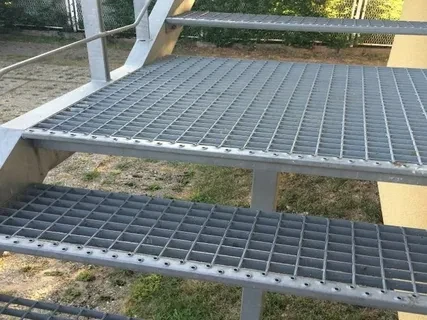
  • Bearing bars and cross bars are welded at intersections.

  • Strong, durable, and suitable for heavy load-bearing uses like platforms, walkways, and trench covers.

2. Press-Locked (or Pressure-Locked) Steel Grating

  • Bearing bars and cross bars are mechanically pressed and locked together without welding.

  • Provides a clean, uniform appearance.

  • Commonly used in architectural applications such as facades, fences, and decorative screens.

3. Swage-Locked Steel Grating

  • Cross bars are inserted and swaged into pre-punched bearing bars.

  • Offers tight tolerances and good strength.

  • Often used in high-precision or architectural projects.

4. Rivet-Bonded Steel Grating

  • Bearing bars and cross bars are joined by riveting.

  • Provides extra strength and durability.

  • Suitable for heavy-duty industrial environments and areas with dynamic loads.

5. Surface Types

  • Plain Surface Grating – smooth top, general use.

  • Serrated Surface Grating – notched top for slip resistance, ideal for wet or oily areas.

  • I-Bar Grating – lighter weight, designed for strength with reduced material usage.
Steel Grating Material

Steel Grating Material

Steel Grating Material

1. Carbon Steel

  • The most widely used material for steel grating.

  • Offers excellent strength and cost-effectiveness.

  • Often hot-dip galvanized or painted to improve corrosion resistance.

  • Suitable for industrial flooring, trench covers, walkways, and platforms.

2. Stainless Steel

  • Provides superior corrosion and rust resistance.

  • Ideal for harsh environments such as marine, food processing, chemical plants, and outdoor installations.

  • More expensive but offers long service life with minimal maintenance.

  • Available in grades such as 304 and 316 stainless steel.

3. Galvanized Steel

  • Carbon steel grating coated with a protective zinc layer by hot-dip galvanizing.

  • Strong, durable, and corrosion-resistant, suitable for outdoor or wet environments.

  • Commonly used in construction, drainage covers, and public infrastructure.

4. Aluminum (sometimes used as an alternative)

  • Lightweight, corrosion-resistant, and non-magnetic.

  • Easier to handle but less load-bearing than steel.

  • Used in architectural designs, marine environments, and lightweight platforms.

If you are interested in our products, you can choose to leave your information here, and we will be in touch with you shortly.