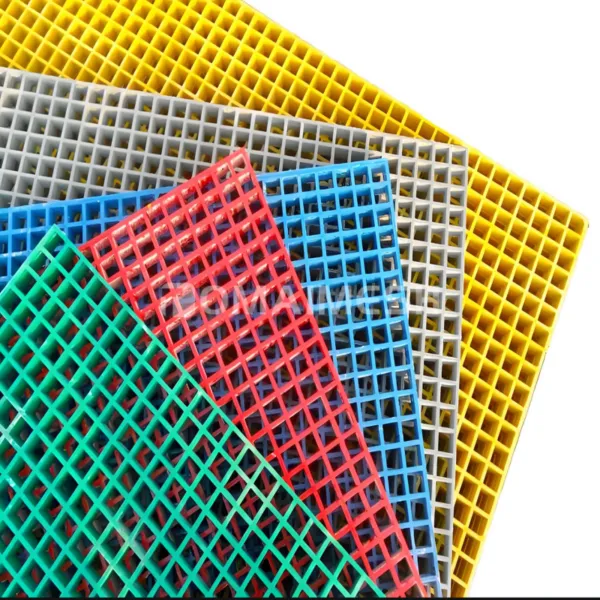
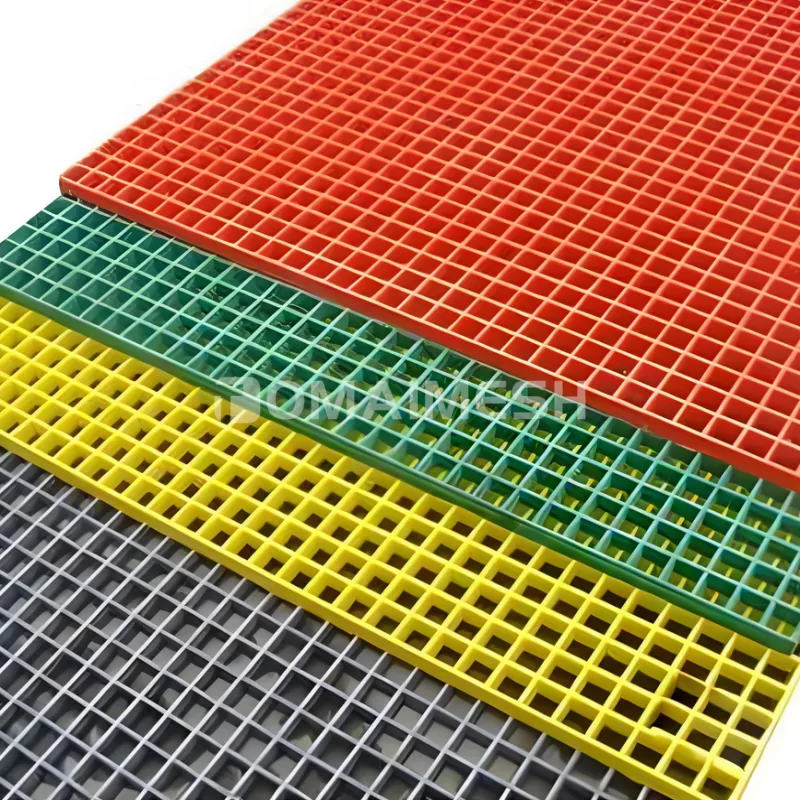
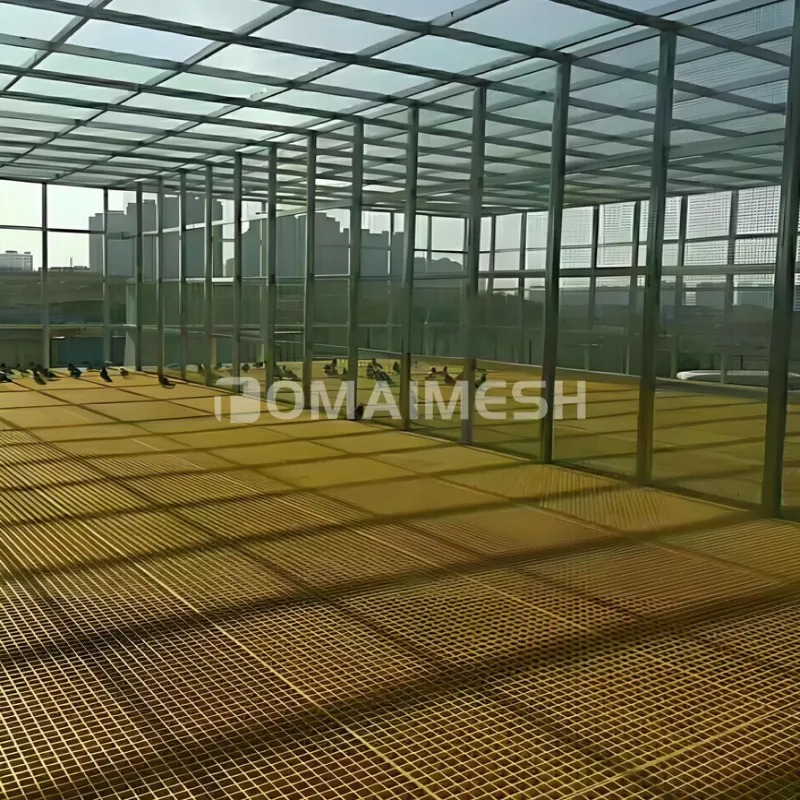
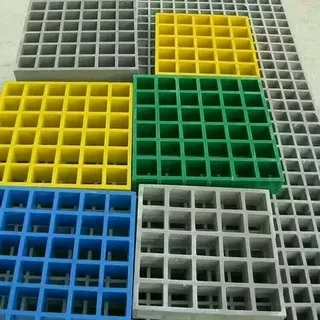
Molded Fiberglass Grating

Material: Polyester/Vinyl Ester/Epoxy Resin | E-Glass Fiber 
Construction: Molded Cross-Rod Design | Anti-Slip Grit/Diamond Surface 
Panel Size: Standard 1.22m×3.66m | Thickness 25-50mm (±1.5mm) 
Load Capacity: Static ≤7.5 kN/m² | Dynamic ≤3.5 kN/m² 
Surface Finish: Pigmented (RAL/BS Colours) | UV-Resistant Gel Coat
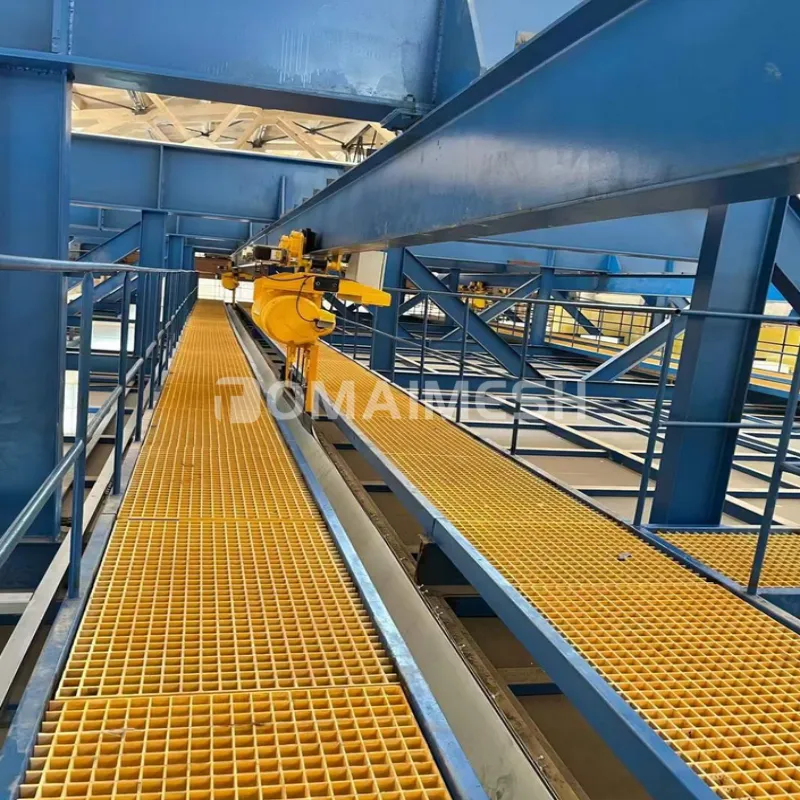
Applications: Chemical Platforms | Marine Decking | Wastewater Treatment

Molded Fiberglass Grating: Material & Construction
  • Advanced Composite Composition:
    • Resin Systems:
      • Polyester Resin: Cost-effective for chemical resistance (pH 3–11) in water treatment plants or food processing.
      • Vinyl Ester Resin: Superior acid/alkali resistance (pH 1–14) for chemical storage platforms or battery manufacturing.
    • Reinforcement:
      • E-Glass Fiber: High tensile strength (1,000–1,500 MPa) for heavy-load walkways or industrial catwalks.
      • C-Glass Fiber: Enhanced corrosion resistance for marine environments or chlorine-rich facilities.
  • Molding Techniques:
    • Compression Molding: Uniform density and void-free surfaces for slip-resistant platforms (DIN 51130 R10–R13).
    • Closed-Mold Process: Minimizes resin waste, ideal for custom shapes like curved stair treads or drain covers.
  • Customizable Features:
    • Panel Dimensions: Standard 1m x 4m or bespoke sizes (thickness: 25–50 mm) for tight retrofit installations.
    • Surface Textures: Grit-top, diamond plate, or smooth finishes (Ra 5–50 µm) for ADA-compliant ramps or offshore gangways.
Read More About fiberglass grating for sale
Read More About grp grating
Molded Fiberglass Grating: Performance Advantages
  • Unmatched Corrosion Resistance:
    • Chemical Inertness: Resists acids, solvents, and salts (ASTM D543 tested) for petrochemical plants or pulp/paper mills.
    • Zero Rust: Ideal for coastal boardwalks or saltwater aquaculture platforms (ISO 9227 salt spray: 10,000+ hours).
  • Lightweight & High Strength:
    • Weight Savings1/4 the weight of steel with comparable load capacity (4–20 kN/m², EN 1991-1-1) for rooftop solar installations.
    • Impact Resistance: Withstands ASTM D256 Izod tests (≥50 J/m) for mining conveyors or airport baggage handling.
  • Safety & Functionality:
    • Non-Conductive: Meets OSHA 1910.269 for electrical substations or utility transformer pads.
Molded Fiberglass Grating: Precision Manufacturing & Testing
  • Automated Production:
    • Pultrusion-Assisted Molding: Ensures consistent fiber alignment for uniform load distribution (ASTM D3917).
    • In-Mold Coating: UV-stable gel coats (ISO 4892-2 certified) for fade-resistant exterior applications.
  • Rigorous Quality Control:
    • Load Testing (ASTM D790): Validates ≤2% deflection under 1.5x design load (e.g., 30 kN/m²).
    • Chemical Immersion Tests: 30-day exposure to HCl, NaOH, and hydrocarbons (ISO 175 compliant).
    • Flame Spread AnalysisUL 94 V-0 certification for marine fire zones or nuclear facilities.
  • Custom Solutions:
    • Cutouts & Inserts: Precision CNC routing for pipe supports or cable management in power plants.
Read More About 25mm grp grating
Molded Fiberglass Grating: Industry Applications
  • Chemical & Petrochemical:
    • Acid Storage Walkways: Vinyl ester grating (38 mm thickness) for sulfuric acid handling (NACE MR0175).
    • Refinery Access Platforms: Non-sparking design for Class I, Div 1 hazardous areas (API RP 500).
  • Marine & Offshore:
    • Boat Dock Grating: C-glass composite with anti-fouling additives for saltwater durability.
    • Oil Rig Stair Treads: Slip-resistant grit surface (R13 rating) with DNV-GL certification.
  • Water & Wastewater:
    • Clarifier Bridges: UV-stable panels for chlorine/ozone exposure (AWWA C950 compliant).
    • Pump Station Covers: Lightweight grating (25 mm thickness) for easy maintenance access.
  • Energy & Utilities:
    • Wind Turbine Platforms: Dielectric properties for lightning-safe access (IEC 61400-22).
    • Solar Farm Walkways: High-temperature resistance (120°C+) for arid region installations.
  • Transportation & Infrastructure:
    • Bridge Sidewalks: Non-corrosive grating with AASHTO LRFD load ratings.
    • Railway Crossing Planks: Impact-resistant design (50 kN/m²) for heavy freight traffic.
Fiberglass Grate Material

Fiberglass Grate Material

Fiberglass Grate Material

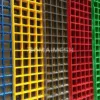
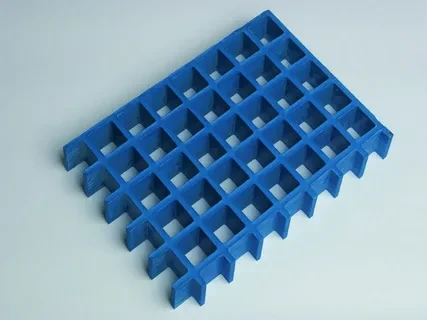
Fiberglass grating material is made from a combination of glass fibers and resin, typically polyester or vinyl ester resin, which are molded into a strong, lightweight, and corrosion-resistant grid structure. The glass fibers provide high tensile strength and rigidity, while the resin binds the fibers together and protects them from moisture, chemicals, and UV exposure.

Fiberglass grating is valued for its excellent corrosion resistance, making it ideal for harsh or chemically aggressive environments where steel or aluminum might corrode. It is also non-conductive and non-magnetic, which makes it suitable for electrical or sensitive industrial applications. Compared with steel grating, fiberglass is lighter, easier to handle and install, and requires minimal maintenance, while still offering good load-bearing capacity.
Frp Grating Fixing Details

Frp Grating Fixing Details

Frp Grating Fixing Details

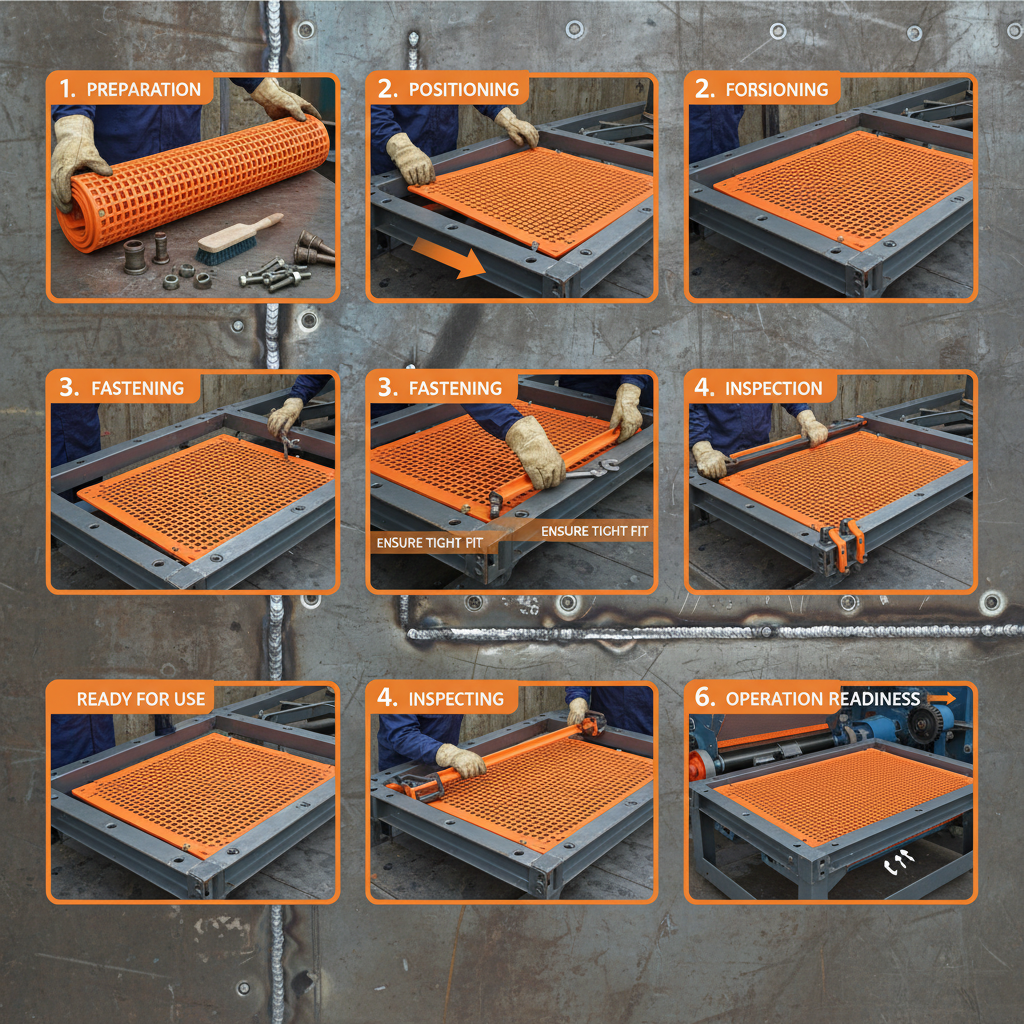
FRP (Fiberglass Reinforced Plastic) grating fixing details are crucial to ensure safety, stability, and long-term performance. Proper installation prevents excessive deflection, slipping, or damage due to loads, thermal expansion, or environmental conditions. Here are the main fixing methods and details:

1. Support Structure

  • FRP grating is typically supported on steel, aluminum, or FRP beams.

  • Bearing bars should align with the support beams to distribute loads evenly.

  • Recommended span between supports depends on grating thickness, load, and type (pultruded or molded).

2. Fastening / Clips

  • Standard FRP Grating Clips: Usually made of stainless steel or FRP; these hold the grating at intersections of bearing bars and supports.

  • Bolted Fixing: Clips are bolted into the support structure using corrosion-resistant fasteners.

  • Snap-Fit / Spring Clips: For quick installation and easy removal for maintenance.

3. Thermal Expansion Consideration

  • FRP expands and contracts with temperature changes.

  • Leave small gaps (~1–2 mm per meter) at panel edges to accommodate thermal movement.

  • Avoid rigidly fixing panels at all four edges; typically, one end is fixed and the other is allowed to move slightly.

4. End and Edge Protection

  • Edges may require additional framing or channel support to prevent chipping or sagging.

  • Optional capping or angle bars can enhance aesthetics and protect edges.

5. Spacing and Load Considerations

  • Clips are usually spaced every 300–500 mm along bearing bars, depending on load requirements.

  • Ensure proper alignment to avoid concentrated stress on unsupported spans.

If you are interested in our products, you can choose to leave your information here, and we will be in touch with you shortly.